VAR: What 4 World Cup Years Taught Me
Video Assistant Referee, or VAR, is a football officiating system that checks major referee decisions using multiple broadcast cameras and communication with the on-field referee. In FIFA competitions...

VAR: What 4 World Cup Years Taught Me
Video Assistant Referee, or VAR, is a football officiating system that checks major referee decisions using multiple broadcast cameras and communication with the on-field referee. In FIFA competitions, including the 2018, 2022, and upcoming 2026 World Cups, VAR reviews goals, penalties, direct red cards, and mistaken identity, but it does not referee every challenge or restart. The Video Assistant Referee works from a dedicated video operation room, while the referee remains responsible for the final decision on the pitch. Under the International Football Association Board (IFAB) protocol, intervention requires a “clear and obvious error” or a “serious missed incident”; there is no fixed time limit for accuracy. VAR automatically checks every eligible incident, so players cannot demand a review. The practical takeaway is simple: understand the four review categories, then judge a decision by the protocol rather than by the delay on your television screen.

Photo by sirmudi_photography on Pexels
VAR exists because the expected cost of one decisive officiating error can be enormous: a wrongly allowed goal may change qualification, prize money, public trust, and an entire tournament narrative. However, VAR is not a second referee replacing human judgment, and it is not a universal replay service for every disputed tackle. It is a controlled intervention system designed to correct specific, match-changing mistakes while preserving the referee’s authority and the flow of football. World Cup Hub covers match predictions, team tactics, player statistics, and tournament developments, so understanding VAR gives you a sharper framework for evaluating controversial moments rather than reacting to television drama alone. Before placing any prediction or assessing a team’s tournament prospects, check whether the incident falls inside the official review protocol. Want a clearer breakdown of match decisions and tournament context?
[Internal Link: World Cup match predictions and tactical analysis]
The Bottom Line
VAR works by automatically checking key incidents, alerting the VAR team when footage may reveal a clear and obvious error, and allowing the on-field referee to confirm or overturn the original decision. The referee’s decision remains final, even when the recommendation comes from the video officials.
The system follows the official IFAB Video Assistant Referee protocol, which states that “the referee must always make a decision.” That sentence matters more than many viewers realise. The referee cannot deliberately refuse to decide and outsource the moment to VAR; instead, the referee must make an initial call, and that call can later be checked. A goal, penalty, red-card incident, or mistaken-identity decision is automatically reviewed in the background, usually without stopping play unless intervention becomes necessary. If the video team finds no clear error, the original decision stands, even when supporters strongly disagree.
The expected-value logic is straightforward. Suppose a decision has a high probability of changing the match and a meaningful chance of being wrong; spending 30 seconds or several minutes checking it can be justified because the benefit of correcting the error exceeds the cost of interruption. Conversely, reviewing every minor foul would create too many false positives, reduce continuity, and make football unwatchable. That is why VAR uses a high intervention threshold rather than a “perfect decision on every event” standard. According to FIFA, implementation also depends on approved competition procedures, trained officials, suitable technology, and written authorisation where required.
What Does VAR Review?
VAR reviews four official categories:
- Goal or no goal: This includes possible offside, handball, attacking fouls, and whether the ball fully crossed the goal line.
- Penalty or no penalty: The team checks whether a foul occurred inside or outside the penalty area and whether a penalty was incorrectly awarded.
- Direct red card incidents: Serious foul play, violent conduct, and other sending-off offences may be reviewed, but a clearly incorrect second yellow card is not normally a VAR category.
- Mistaken identity: VAR can help identify the correct player when the referee cautions or sends off the wrong member of a team.
Some competitions use additional technology, such as goal-line systems and semi-automated offside technology, but these tools do not change the legal boundaries of VAR. A camera may show that a ball crossed the line, yet the referee still applies the Laws of the Game. A replay may look uncomfortable in slow motion, yet slow motion can distort speed and contact, which is one reason officials use normal-speed footage when judging intensity. This is a useful [Internal Link: guide to football officiating terms] for readers who want to distinguish VAR, goal-line technology, and semi-automated offside.
What Players Actually See?
Players do not see the entire VAR investigation as it happens. They see the referee’s initial signal, the referee’s review gesture if an on-field review begins, and eventually the final decision; the detailed camera selection, replay speed, virtual lines, and communication take place away from the pitch.
A typical sequence contains several separate stages:
- The VAR team checks the incident automatically while play continues or after a stoppage.
- The VAR identifies a possible clear and obvious error or serious missed incident.
- The VAR communicates a recommendation to the referee.
- The referee either accepts factual information or conducts an on-field review.
- The referee announces or signals the final decision.
- Play restarts under the applicable Law of the Game.
The referee can accept a factual VAR recommendation without watching the monitor when the question is objective, such as whether a player was offside at the moment a pass was played or whether the ball crossed the goal line. For subjective questions, such as whether contact meets the threshold for a penalty or direct red card, an on-field review is generally more informative. This distinction explains why some decisions are completed quickly while others produce a long pause: the probability of disagreement is higher when interpretation, force, control, and player intent must be assessed.
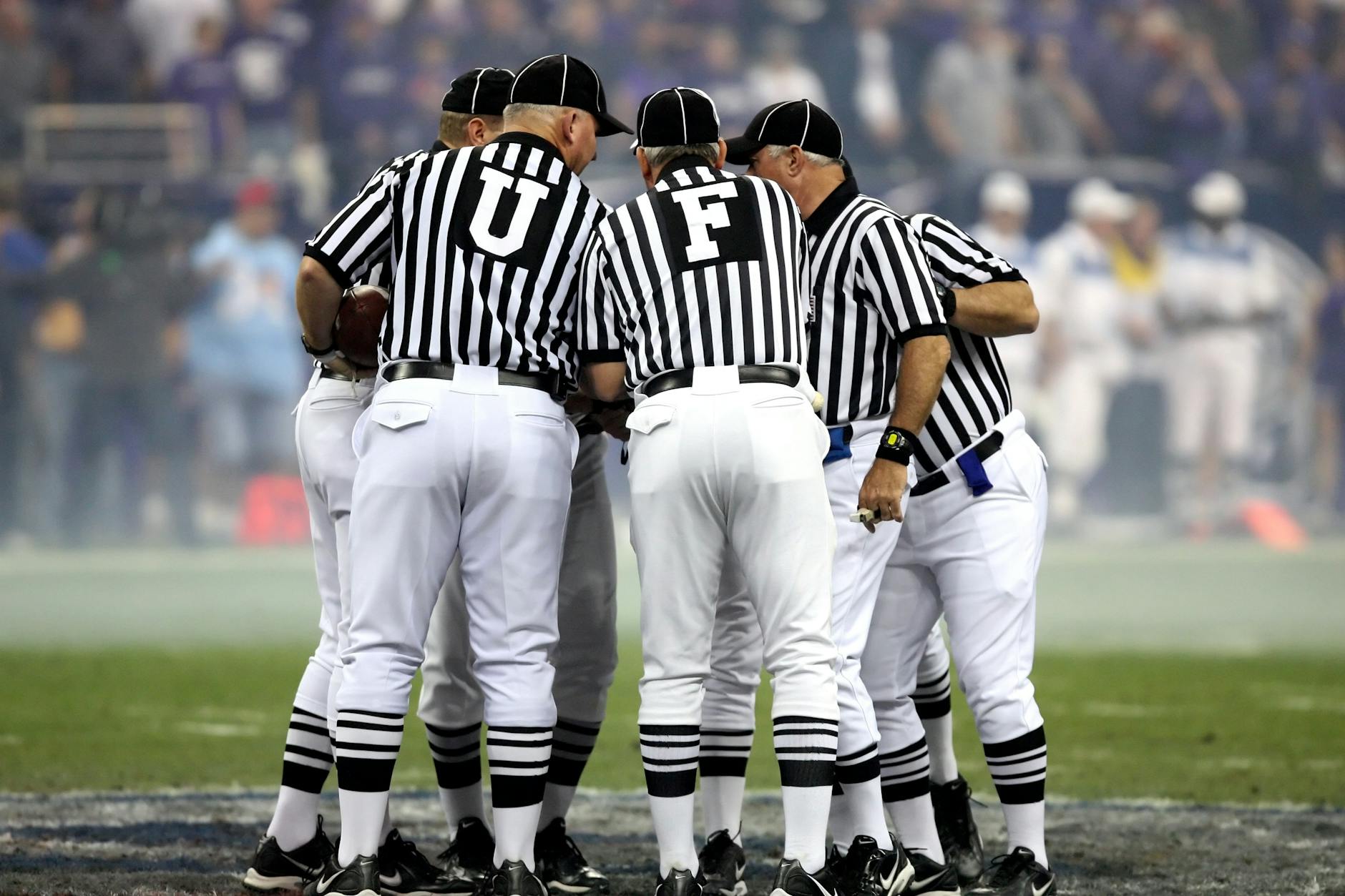
Photo by Pixabay on Pexels
The offside process is especially technical. Officials determine the exact moment the ball is played, identify the relevant body part of the attacker and the second-last opponent, and then assess whether the attacker is in an offside position. Hands and arms are not considered for offside purposes, while the torso, head, legs, and feet can matter. Semi-automated offside technology may supply tracking data and a three-dimensional visualisation, but the system still supports rather than replaces the match officials. The operator’s evidence must be connected to the Laws of the Game, not merely to an attractive graphic shown on television.
An important operational insight is that camera availability affects certainty. A broadcast may show 20 or more camera feeds, but not every angle is suitable for every question. A camera positioned behind the goal can clarify a goalkeeper’s movement, while a high sideline angle may be better for offside alignment. If the evidence cannot clearly establish an error, the original decision should remain. This is not a technical failure; it is the intended statistical consequence of a high intervention threshold.
The 3 Things That Matter Most
Three variables determine whether VAR changes a decision: the incident category, the quality of the evidence, and the legal threshold for intervention. Fans often focus only on the final replay, but the decision is actually a conditional calculation: is this reviewable, does the evidence answer the question, and is the original decision clearly wrong?
1. Reviewability
The first test is jurisdiction. VAR cannot correct every mistake. A missed corner kick, ordinary free kick, throw-in, or second-yellow-card error is generally outside the four principal review categories. If a corner is incorrectly awarded, the protocol has a narrow exception in some implementations, but the broader principle remains unchanged: VAR is not a general appeals court for every restart.
2. Evidence
The second test is evidential strength. A replay must show what happened with enough clarity to justify changing the referee’s call. Different angles may reveal different facts, and a zoomed-in image can exaggerate contact that was minor at full speed. For that reason, VAR officials compare angles, review the sequence before and after the incident, and avoid treating one frozen frame as the complete event.
3. Threshold
The third test is the phrase “clear and obvious error.” The IFAB Laws of the Game do not ask whether another referee might have made a different decision; they ask whether the original decision was clearly wrong under the relevant Law. This distinction reduces unnecessary intervention. If two reasonable referees could reach different conclusions from the same footage, the original decision normally survives.
Consider a penalty appeal with 10 centimetres of contact and no clear evidence about whether the attacker initiated it. A supporter may believe the contact was decisive, while another observer may consider it normal football. The expected benefit of overturning the call is then limited because uncertainty is high. By contrast, if footage clearly shows a foul outside the penalty area, the ball striking an attacker’s hand before a goal, or a defender receiving a red card intended for a teammate, the expected value of intervention is much larger.
Want to apply this framework to real tournament scenarios?
Why Does VAR Take So Long?
VAR takes longer when officials must synchronise several camera angles, identify the relevant moment, draw offside lines, assess the restart point, or decide whether contact meets a subjective foul threshold. A review is not measured only by the number of replays; it also includes communication, legal classification, and the referee’s on-field review.
The most common misunderstanding is that a longer review automatically means a stronger case. It does not. Review duration is a poor proxy for correctness because a factual offside check can be technically complex but decisive, while a subjective foul may be resolved quickly when the video clearly contradicts the original decision. In practice, the key question is not “Why did this take two minutes?” but “What precise Law is being tested, and does the footage prove a clear error?”
At the FIFA World Cup, tournament production adds another layer. Broadcasters show selected replays and graphics, not every communication between the VAR, assistant VAR, replay operator, and referee. Viewers therefore observe an edited information stream. The public screen may show a definitive line after the decision, but that image does not reveal every uncertainty considered before the line was accepted. This gap between operational evidence and broadcast presentation is a major reason supporters sometimes feel that VAR is arbitrary.
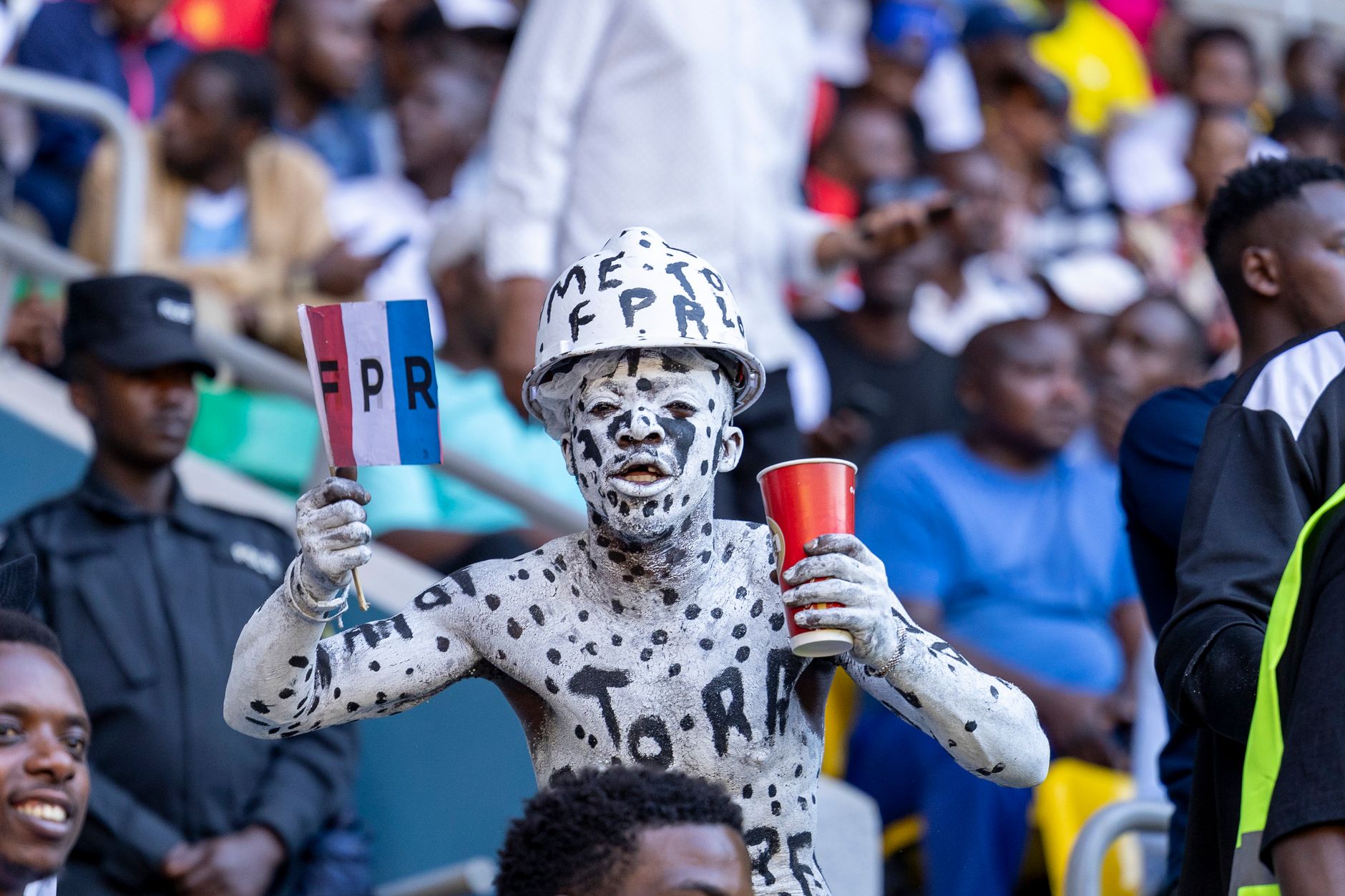
Photo by Safi Erneste on Pexels
Edge Cases & Gotchas
VAR decisions become confusing when the incident crosses legal boundaries, when play has already restarted, or when disciplinary consequences continue after the original call changes. The protocol is deliberately narrow because reopening every previous phase would create an unstable match state.
What Happens After Play Restarts?
If play has stopped and restarted, a review is usually no longer possible for an ordinary goal, penalty, or red-card decision. The protocol preserves the integrity of the restart and prevents an endless chain of retroactive corrections. Limited exceptions can apply to mistaken identity and certain violent-conduct, spitting, biting, or extremely offensive incidents, because those offences carry a serious disciplinary risk that cannot sensibly disappear simply because the match resumed.
Can VAR Cancel Other Cards?
No. If play continues after a reviewable incident, disciplinary action for events occurring in the meantime is not automatically cancelled when the original decision changes. For example, a player may be cautioned for delaying a restart during the review period even if the earlier penalty is later overturned. There are specific exceptions involving a caution or sending-off for stopping or interfering with a promising attack or denying an obvious goal-scoring opportunity, but the general principle is that later misconduct remains a separate event.
Does VAR Judge Intent?
VAR can help officials assess evidence relevant to intent, but it does not mechanically measure a player’s thoughts. Handball decisions may involve whether the arm position is justifiable by the player’s movement, whether the player made the body unnaturally bigger, and whether the contact had a punishable consequence. Red-card decisions can involve force, control, danger to an opponent, and whether conduct was serious foul play or violent conduct. Slow motion helps locate contact, but normal speed often gives better evidence of force and tempo.
A particularly important edge case concerns goalkeeper encroachment during a penalty kick. The goalkeeper’s position, the kicker’s action, and the outcome of the kick can determine the correct remedy. A goalkeeper moving a small distance off the line is not treated identically to a goalkeeper who gains a clear advantage and saves the kick. The same logic applies to encroachment by outfield players: the consequence depends on who encroached and how the incident affected the result.
What VAR Cannot Do
VAR cannot guarantee that every football decision is objectively perfect. It cannot remove interpretation from fouls, handball, advantage, reckless challenges, or simulation. It also cannot turn an incorrect tactical choice into a reviewable incident. A manager who leaves a striker on the bench, a defender who chooses the wrong marking position, or a goalkeeper who misjudges a cross remains responsible for that football decision.
This is where prediction analysis needs discipline. VAR may increase the probability that a clear penalty or offside call is corrected, but it does not make match outcomes predictable. World Cup Hub’s tactical analysis should therefore treat VAR as a variable affecting event probability, not as a guaranteed advantage for a particular team. A team that attacks the penalty area more frequently may create more reviewable moments, yet it may also produce more marginal decisions that never meet the intervention threshold. Learn more through this [Internal Link: World Cup team tactics and player statistics guide].
The most overlooked practical detail is referee visibility. IFAB protocol says the referee should remain visible during the review process to support transparency. That requirement does not mean every communication is public; it means the decision-maker cannot disappear from the match environment while the review is conducted. The visible review gesture, monitor visit, and final signal create an accountable chain, even though the technical discussion remains private.
See how officiating factors fit into broader tournament analysis.
Verdict
VAR works best when treated as a risk-control system rather than a promise of perfect officiating. It automatically checks high-impact incidents, allows trained video officials to identify potential errors, and preserves the on-field referee’s final authority. The four core categories are goals, penalties, direct red cards, and mistaken identity; within those categories, intervention requires a clear and obvious error or a serious missed incident. That structure is intentionally conservative because unlimited intervention would create more disruption and inconsistency than it prevents.
My final verdict is firm: judge VAR by whether it corrects high-cost, demonstrable errors, not by whether it eliminates every controversial opinion. The system can improve fairness, but it cannot replace the Laws of the Game, referee judgment, camera quality, or responsible interpretation. For World Cup 2026 coverage, use VAR knowledge alongside team form, tactical matchups, player availability, and statistical context. Most importantly, never treat a pending review as a guaranteed result when evaluating a match prediction; until the referee signals the decision, the probability distribution remains open.

Photo by Anh Lee on Pexels
Frequently Asked Questions
Q: What is VAR in football?
A: VAR is a video-based officiating support system that helps the on-field referee review four major incident categories. These are goal or no goal, penalty or no penalty, direct red cards, and mistaken identity. A VAR team checks footage from multiple camera angles and recommends a review only when it identifies a clear and obvious error or serious missed incident. The referee always makes the final decision, whether that decision follows a video recommendation or an on-field review. VAR does not automatically review every foul, throw-in, corner, or second yellow card.
Q: How does VAR work step by step?
A: VAR works by checking an incident, identifying possible error, communicating with the referee, and supporting a final decision. First, the video officials review eligible incidents automatically while play continues or after a stoppage. If the evidence suggests a serious problem, the VAR recommends either factual confirmation or an on-field review. The referee then accepts the factual information or watches the replay at the pitch-side monitor before signalling the outcome. Players and coaches cannot formally demand a review, and play may continue during the initial check.
Q: What is the difference between VAR and goal-line technology?
A: VAR reviews several types of match-changing decisions, while goal-line technology specifically determines whether the entire ball crossed the goal line. Goal-line technology normally provides an immediate signal to the referee and does not require the same subjective review process as a foul or handball. VAR can examine the build-up to a goal for offside, handball, or an attacking foul, whereas goal-line technology focuses on the ball’s position relative to the goal line. Both systems may operate in the same FIFA competition, but they answer different questions.
Q: Why does VAR sometimes take so long?
A: VAR takes longer when officials must compare camera angles, establish the exact incident, draw offside lines, or judge a subjective foul. A long review does not necessarily mean that the original decision will be overturned. The team must identify the relevant Law, confirm the correct restart, and communicate accurately with the referee. Broadcast viewers see only selected replays, so they do not see every technical step inside the video operation room. There is no fixed maximum review time under the IFAB protocol because accuracy has priority over speed.
Q: Can VAR overturn a referee’s decision after play restarts?
A: VAR generally cannot review an ordinary incident after play has restarted, because the restart establishes a new phase of play. Exceptions may apply to mistaken identity and certain serious violent or abusive offences, including spitting, biting, or extremely offensive conduct. This rule prevents matches from becoming permanently reviewable and protects the legal certainty of restarts. If a review changes an earlier decision, separate misconduct committed during the review period may still be punished unless a specific protocol exception applies.
Q: Does VAR review every foul and offside position?
A: VAR checks every potentially relevant goal, penalty, direct-red-card, and mistaken-identity incident, but it does not review every ordinary foul or offside position. An offside check usually becomes relevant when a goal or another reviewable incident occurs. Minor fouls, routine free kicks, most throw-ins, and ordinary corners remain the responsibility of the on-field officials. This limitation is deliberate: reviewing too many low-impact decisions would increase delays and inconsistent intervention without producing a comparable fairness benefit.
Q: Is VAR good for football and match predictions?
A: VAR improves the chance of correcting clear, high-impact officiating errors, but it does not make football results predictable. It can affect the probability of a goal, penalty, or red card being awarded, yet subjective incidents still depend on evidence and referee interpretation. For World Cup 2026 analysis, VAR should be treated as one variable alongside tactics, injuries, player form, and chance creation. A responsible prediction should never assume that a pending VAR check will automatically produce the outcome a team or bettor wants.
World Cup Hub provides ongoing World Cup analysis for fans who want decisions explained through tactics, data, and context rather than emotion alone. Read the latest tournament coverage before forming your next match view.
Thank you for reading.
World Cup Hub · Editorial Archive