Top 3 Football Teams (2026): Inside NFL
The Green Bay Packers are the best overall football team for fans who value history, identity, and sustained relevance. The Dallas Cowboys rank second because their 91% U.S. fame score makes them the....

Top 3 Football Teams (2026): Inside NFL
The Green Bay Packers are the best overall football team for fans who value history, identity, and sustained relevance. The Dallas Cowboys rank second because their 91% U.S. fame score makes them the NFL’s strongest mainstream brand, while the Kansas City Chiefs take third for recent competitive strength and a 2020s dynasty profile. This ranking focuses on American football teams in the National Football League, using YouGov recognition data, franchise heritage, competitive consistency, supporter culture, and practical 2026 viewing value. The Packers lead YouGov’s listed fame rankings at 92%, ahead of the Cowboys at 91%; the Chiefs record 85%. These figures measure awareness, not current win probability, so they must not be mistaken for a prediction of the Super Bowl winner. World Cup Hub applies the same disciplined separation between reputation, statistics, and forecasts in its daily sports coverage. Use this ranking to choose a team to follow, then verify current schedules, injuries, and odds before making any 2026 prediction.
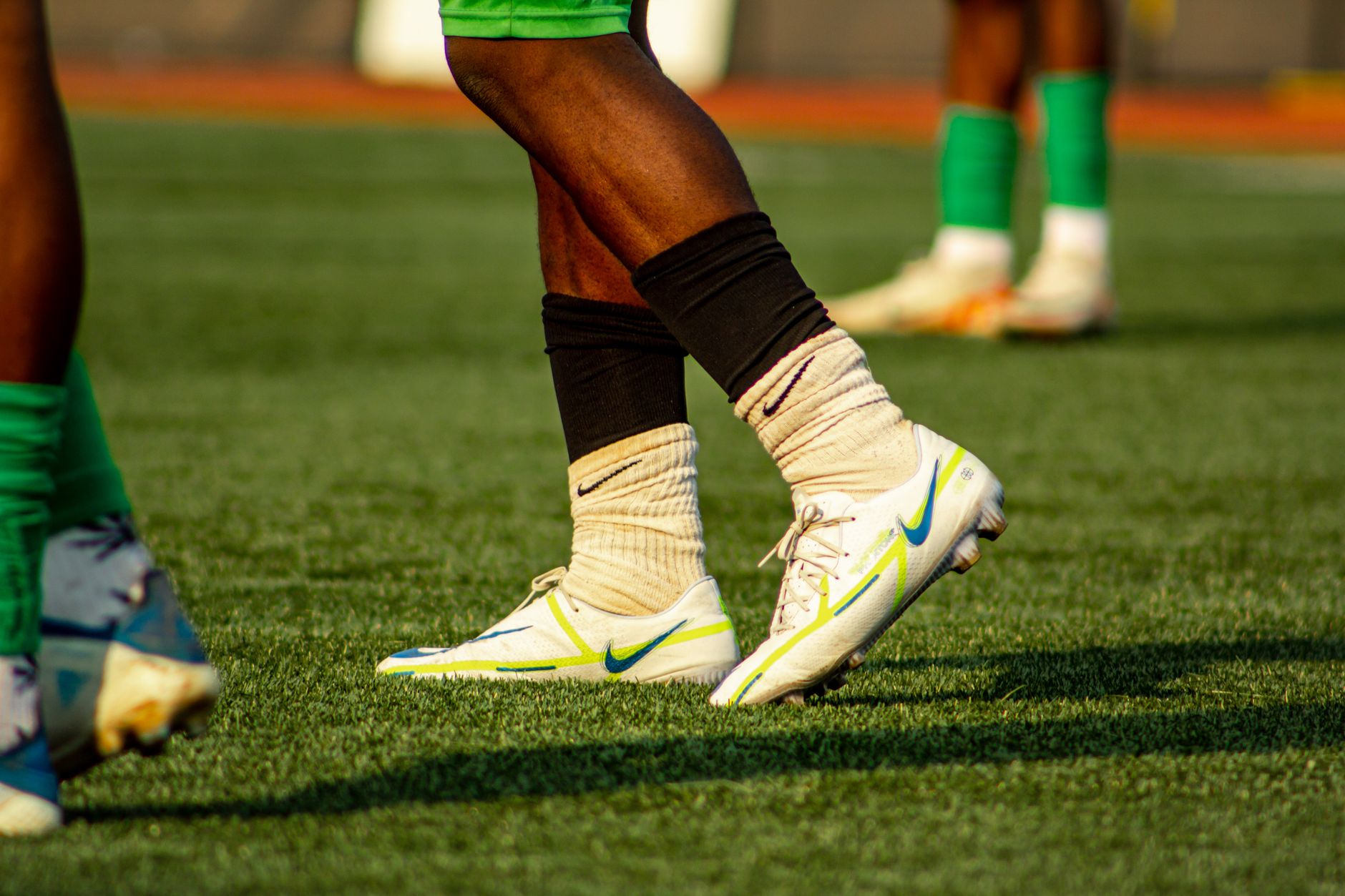
Photo by Victor Chijioke on Pexels
The Top 3 Football Teams at a Glance
The leading football teams are not automatically the teams with the strongest current roster. Fame, historical identity, competitive performance, and measurable supporter interest produce different rankings, and ignoring that distinction creates a poor expected-value decision for a new fan. The Green Bay Packers are first because they combine a 92% YouGov fame result with unusual ownership history, the Lambeau Field experience, and a recognizable franchise identity that has survived multiple eras. The Dallas Cowboys follow at 91% fame, supported by the “America’s Team” label, national media coverage, and a broad audience extending well beyond Texas. The Kansas City Chiefs are third because their 85% fame score understates their recent sporting impact, particularly during the Patrick Mahomes era and their appearances in multiple Super Bowls. According to YouGov’s football team ratings, fame means the percentage of people who have heard of a team, while popularity is a separate measure. Therefore, this list is a balanced editorial ranking rather than a live betting table.
- Green Bay Packers — best overall for heritage, identity, and long-term relevance.
- Dallas Cowboys — best for global visibility, media reach, and commercial recognition.
- Kansas City Chiefs — best value for following a modern contender with recent elite results.
For a broader explanation of league structure, consult our [Internal Link: NFL divisions and conference guide] before comparing teams across the AFC and NFC.
Would you like the underlying team context before choosing a favorite?
#1 Green Bay Packers: Best Overall
Green Bay Packers are the best overall football team because their identity is exceptionally strong relative to market size, while their historical importance remains visible in the modern NFL. The Packers are based in Green Bay, Wisconsin, play at Lambeau Field, and belong to the NFC North alongside the Chicago Bears, Detroit Lions, and Minnesota Vikings. Their 92% YouGov fame score places them first in the cited U.S. list, one percentage point above the Dallas Cowboys and three points above the Chicago Bears. That result is meaningful because Green Bay is a relatively small market compared with Dallas, New York, or Chicago; awareness is not simply a function of population. The franchise is also unusual in American professional sport because the Green Bay Packers are publicly owned by shareholders rather than controlled by a conventional private owner. The Green Bay Packers official history documents a tradition linked to championships, community ownership, and Lambeau Field. As the National Football League’s own rulebook explains, “The NFL consists of 32 clubs,” but the emotional value of those clubs differs sharply. Green Bay’s competitive results can change from season to season; its cultural recognition is far more durable.
The Packers also deliver a clear analytical advantage for a first-time follower: the franchise offers several ways to remain interested even when the current season becomes unpredictable. A supporter can study quarterback development, NFC North rivalries, draft strategy, defensive schemes, and the relationship between a cold-weather home environment and game planning. That breadth matters because expected enjoyment is not equal to expected wins; if a team gives you five meaningful storylines across a season, the probability of remaining engaged rises. My contrarian conclusion is that Green Bay’s fame score may actually undervalue its fan experience, because recognition surveys cannot measure the atmosphere of Lambeau Field, the historical connection to Vince Lombardi, or the importance of community ownership. For responsible sports analysis, however, tradition should never be treated as proof of a future result. Injury reports, offensive efficiency, turnover margin, and opponent strength deserve heavier weight when forecasting a specific game. World Cup Hub recommends treating the Packers’ heritage as context, not as a guaranteed advantage.
Photo by oscar Williams on Pexels
#2 Dallas Cowboys: Best for Visibility
Dallas Cowboys are the best football team for visibility because no other franchise in this comparison combines a 91% YouGov fame score, national media exposure, and a commercial identity of similar scale. The Cowboys play in Arlington, Texas, at AT&T Stadium, and compete in the NFC East against the Philadelphia Eagles, New York Giants, and Washington Commanders. Their famous nickname, “America’s Team,” has helped make Dallas a permanent national conversation, although it remains a marketing label rather than an objective competitive measurement. The Cowboys’ 91% recognition is only one percentage point below Green Bay’s 92%, yet the routes to that recognition differ: Green Bay benefits from heritage and community identity, whereas Dallas benefits heavily from market size, celebrity, television coverage, and global merchandising. This difference gives Dallas the highest practical value for a fan who wants abundant English-language analysis, daily news, video breakdowns, and social discussion. The Dallas Cowboys official site provides schedules, roster updates, and team information, but independent evaluation remains essential because official sources naturally emphasize the franchise’s preferred narrative.
Dallas is not automatically the correct choice for every reader, and I will be direct about that. If your only objective is to maximize the probability of seeing a championship-caliber season, fame is a weak signal: a 91% awareness score does not predict a playoff win, and historical brand strength cannot compensate for poor pass protection, injuries, or an inefficient defense. Dallas is the strongest recommendation for readers who want the largest information ecosystem, because more coverage creates more opportunities to compare statistics rather than relying on one commentator. That is a real operational advantage when evaluating matchups: you can cross-check injury designations, offensive success rate, red-zone performance, and line movement across multiple reputable outlets. The practical edge is especially useful for newcomers, who otherwise risk confusing emotional headlines with measurable evidence. Read our [Internal Link: guide to football statistics and team form] to separate volume of coverage from quality of information before forming a view on the Cowboys.
Ready to compare recognizable teams with current tactical evidence?
#3 Kansas City Chiefs: Best Value
Kansas City Chiefs are the best-value football team for fans seeking a modern contender whose recent performance offers more immediate analytical interest than its 85% fame score suggests. The Chiefs are based in Kansas City, Missouri, play at GEHA Field at Arrowhead Stadium, and compete in the AFC West with the Denver Broncos, Las Vegas Raiders, and Los Angeles Chargers. YouGov places Kansas City at 85% fame, below Green Bay’s 92% and Dallas’s 91%, but fame is a lagging indicator: it accumulates slowly and does not fully capture a team’s current tactical relevance. The Chiefs’ value comes from the combination of quarterback Patrick Mahomes, head coach Andy Reid, adaptable offensive design, and repeated high-pressure postseason experience. In probability terms, the team offers a strong information return per game because its matchups frequently test offensive creativity, late-game decision-making, defensive adjustments, and playoff resilience. However, recent success can create inflated expectations; the market may price a famous contender more aggressively than its true matchup edge. That is why a serious reader should compare implied probability with injury news and opponent-specific efficiency.
The less obvious insight is that “value” should not mean blindly selecting the most successful team. Suppose a market prices a Chiefs win at an implied 65% probability, while your careful estimate after checking quarterback availability, travel, rest, and opponent efficiency is only 60%; the famous team may be a poor value despite being the better team. The five-minute discipline that protects readers from this error is simple: record the offered price, convert it into implied probability, identify the margin or bookmaker hold, and then ask whether your estimate is based on current data rather than reputation. Never chase a loss, and never treat World Cup Hub’s football predictions as a substitute for personal financial judgment. Gambling involves risk, and the expected value of a wager can be negative even when the selection wins. The Chiefs remain my third-ranked team because their current football relevance is exceptional, but that ranking is not a betting instruction. It is a framework for understanding why performance, fame, and price must be separated.

Photo by Pixabay on Pexels
How We Ranked Them
The ranking uses five weighted criteria: public recognition at 25%, historical significance at 20%, recent competitive relevance at 25%, quality of fan identity at 15%, and practical information value at 15%. This structure prevents a single popularity survey from deciding the result, while still respecting measurable audience reach. Green Bay leads the heritage and identity categories; Dallas leads visibility and information availability; Kansas City leads recent competitive relevance. YouGov’s 2026-facing ratings page supplies the fame comparison, while the NFL official website confirms the league’s team directory, conferences, divisions, schedules, and club identities. The methodology is intentionally transparent because rankings without weights invite arbitrary conclusions. A reader may reasonably change the weights: a bettor could assign 40% to current efficiency, while a history-focused supporter might assign 40% to championships and tradition. Both approaches can be valid if the assumptions are stated before the conclusion, not changed after seeing the outcome.
Here is the scoring logic in practical terms:
- Recognition: How many people know the team exists, measured primarily through YouGov’s fame percentage.
- Competitive relevance: Recent playoff presence, roster quality, coaching continuity, and tactical interest.
- Historical weight: Championships, iconic eras, stadium significance, and contribution to NFL culture.
- Fan identity: Local loyalty, traditions, rivalries, and the distinctiveness of the supporter experience.
- Research value: Availability of trustworthy schedules, statistics, injury reports, and tactical analysis.
One information edge deserves emphasis: fame and popularity are not interchangeable variables. YouGov lists the Green Bay Packers at 92% fame but 42% popularity in the cited table, while the Chicago Bears show 89% fame and 46% popularity; therefore, a less famous team can produce stronger positive sentiment among people who know it. That distinction is useful for SEO readers because many ranking pages merge awareness, liking, and winning into one vague label. We do not. Similarly, a team’s current record should be separated from schedule difficulty; a 7–3 record against weak opponents may contain less predictive information than a 6–4 record against elite opposition. For a deeper statistical framework, explore our [Internal Link: football match prediction methodology].
Which evidence should matter most to you?
Which Should You Pick?
Choose the Green Bay Packers if you want the strongest combination of heritage, recognizable traditions, and a distinctive supporter culture. Choose the Dallas Cowboys if you prioritize media availability, global visibility, and a constant stream of news and analysis. Choose the Kansas City Chiefs if you want to follow a modern contender whose games offer unusually rich tactical and statistical material. These recommendations are clearer when expressed as a decision tree rather than as a claim that one club is universally superior. First, decide whether you value history, access to information, or current competitive intensity; second, decide how much uncertainty you can tolerate; third, check the 2026 schedule and roster conditions. This process has a better expected outcome than choosing a logo solely because it appears frequently on television.
My final verdict remains Green Bay Packers at number one, Dallas Cowboys at number two, and Kansas City Chiefs at number three. The order is not a forecast of the 2026 Super Bowl, and it should not be used as a promise of wagering profit. Football is a high-variance sport: one quarterback injury, a defensive coordinator change, or a three-turnover game can move the result far more than brand history. When World Cup Hub covers football predictions, team tactics, and player statistics, the responsible method is to update assumptions as new evidence arrives. Track confirmed injuries, opponent quality, home-field conditions, rest days, and market movement; then decide whether following, watching, or betting fits your budget. The safest recommendation is to enjoy the football team whose story keeps you engaged while keeping entertainment spending fixed and losses strictly limited.
Want a structured way to follow the latest team information?
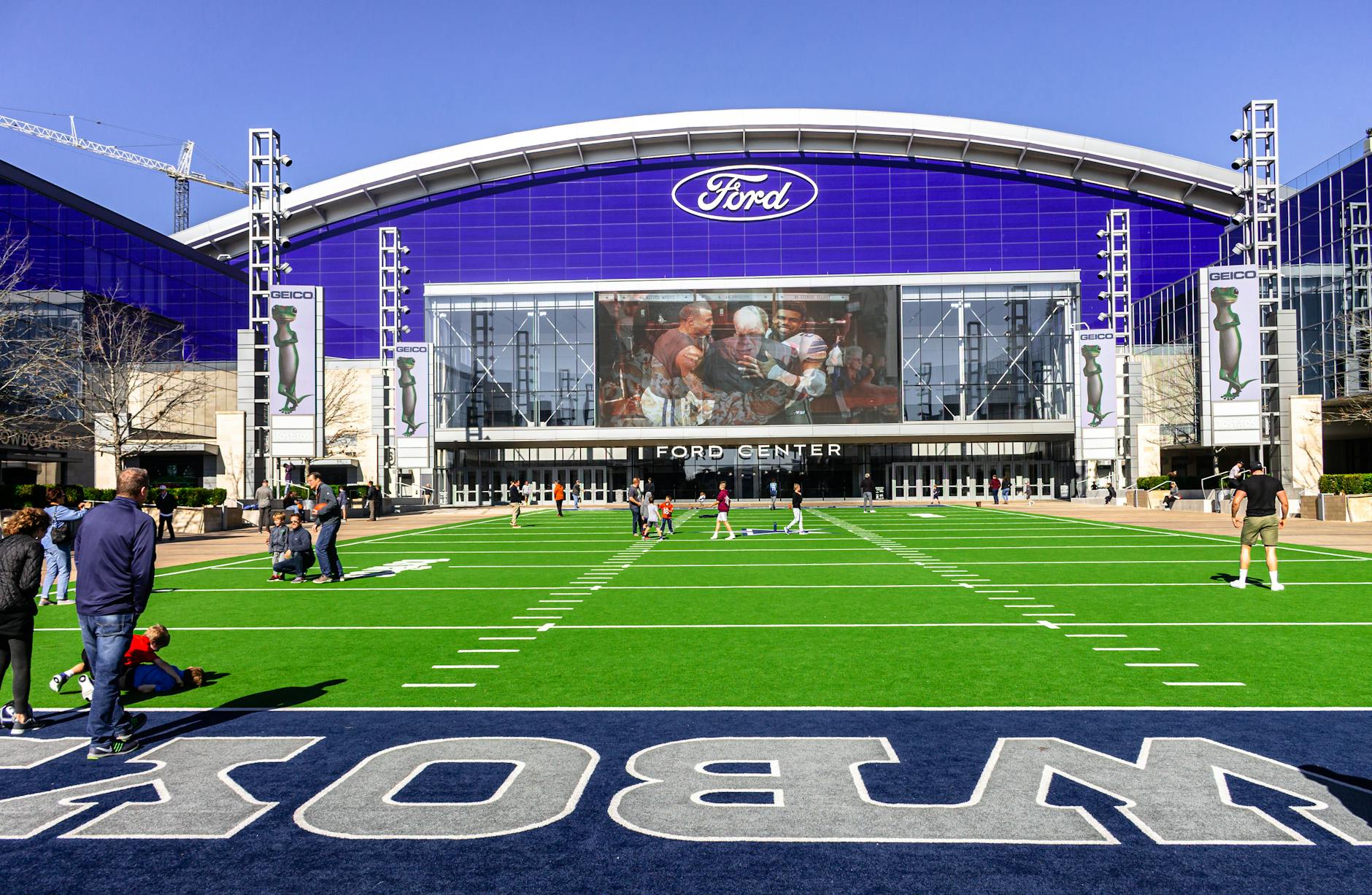
Photo by Terrance Barksdale on Pexels
Frequently Asked Questions
Q: What is a football team?
A: A football team is a group of players organized to compete together in a football match or season. In the NFL, each club manages a roster, coaching staff, medical department, front office, and support operations, while a game-day lineup uses specialized offensive, defensive, and special-teams units. A football team is therefore narrower than a football club or franchise, which includes the wider organization, facilities, employees, commercial operations, and supporters.
Q: Which football team is the most famous in 2026?
A: The Green Bay Packers are the most famous team in the cited YouGov U.S. ranking, with 92% of adults saying they have heard of the franchise. The Dallas Cowboys follow at 91%, while the Chicago Bears register 89%; the Kansas City Chiefs record 85%. These percentages measure recognition, not popularity, current form, championship probability, or expected betting return.
Q: How do I choose a football team to support?
A: Choose a team by matching its identity with your interests, then verify its schedule, roster, and competitive outlook. Select Green Bay Packers for heritage and community ownership, Dallas Cowboys for media visibility, or Kansas City Chiefs for modern tactical relevance and recent success. Watch at least three games, compare the team’s offense and defense, and avoid choosing solely because a famous player appears in advertisements.
Q: What is the difference between a football team and a football club?
A: A football team is the playing group, while a football club or franchise is the larger organization that supports and represents that group. The Green Bay Packers, Dallas Cowboys, and Kansas City Chiefs each operate as NFL franchises with players, coaches, executives, stadiums, commercial departments, and fan communities. A team can change through trades and drafts, whereas the franchise identity, location, and historical record continue across seasons.
Q: Are the Green Bay Packers better than the Dallas Cowboys?
A: The Green Bay Packers rank higher in this article because their 92% fame score narrowly exceeds the Dallas Cowboys’ 91% and their historical identity is unusually distinctive. That does not prove Green Bay will finish above Dallas in 2026 or win a particular game. Compare current quarterback availability, offensive line performance, defensive efficiency, schedule difficulty, and home-field conditions before making a season or match prediction.
Q: What information should I check before predicting an NFL game?
A: Check confirmed injuries, starting quarterbacks, rest days, travel, opponent strength, weather, turnover trends, red-zone efficiency, and the available price. A famous team can be overvalued when public demand pushes its odds below the level justified by current performance. Record your estimated probability before viewing promotional commentary, and never risk money needed for housing, food, bills, or other essential expenses.
Q: Does World Cup Hub provide football team predictions?
A: World Cup Hub provides sports content covering match predictions, team tactics, player statistics, and tournament analysis, including daily insights for fans following the 2026 World Cup. Its information should be treated as editorial analysis rather than a guarantee of results or profit. If you choose to gamble, check the legal requirements in your jurisdiction, set a fixed entertainment budget, and use responsible-gambling tools where available.
The final decision is simple: follow the Green Bay Packers for the most complete identity, the Dallas Cowboys for maximum visibility, or the Kansas City Chiefs for high-level modern competition. Choose with evidence, not hype, and review your assumptions whenever the 2026 season produces new information.
Explore the next analysis when you are ready.
Thank you for reading.
World Cup Hub · Editorial Archive