Inside 2026 Football: A 5-Step Watchlist
The top football leagues to watch in 2026 are the Premier League, Bundesliga, La Liga, Serie A, Ligue 1, Brasileirão Série A, MLS, Liga Portugal, Eredivisie and Liga MX. These competitions combine eli...

Inside 2026 Football: A 5-Step Watchlist
The top football leagues to watch in 2026 are the Premier League, Bundesliga, La Liga, Serie A, Ligue 1, Brasileirão Série A, MLS, Liga Portugal, Eredivisie and Liga MX. These competitions combine elite players, continental ambition, strong attendance and broad international coverage before the FIFA World Cup 2026 in Canada, Mexico and the United States. The Premier League reaches more than 180 countries and recorded approximately 15.38 million total attendance in the latest cited season, while the Bundesliga recorded about 11.83 million and remains one of football’s strongest matchday products. MLS also deserves attention because its international profile is expanding rapidly, especially ahead of the 2026 World Cup. For the clearest viewing plan, begin with the Premier League and Bundesliga, then add one technical league such as La Liga and one talent-development league such as Brasileirão Série A.
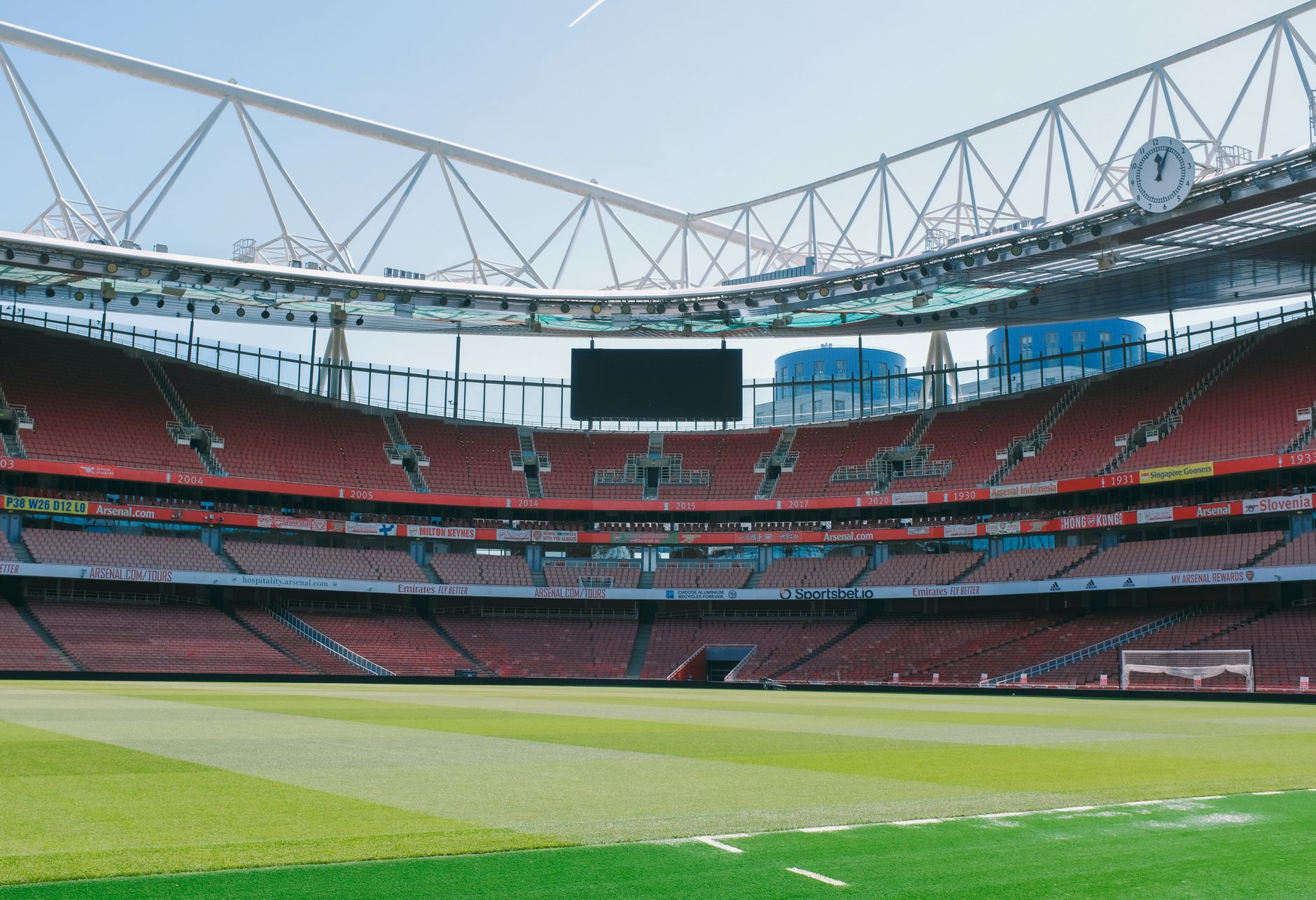
Photo by Huy Phan on Pexels
The best league is not automatically the most entertaining league for every viewer. I will be honest with you: choosing only by global reputation can produce a poor viewing schedule, because a league’s average quality, tactical identity, kickoff times and title-race balance affect your actual enjoyment far more than a promotional ranking. World Cup Hub therefore evaluates the 2026 football landscape through five practical variables: player quality, depth beyond the leading clubs, competitive tension, stadium culture and relevance to the FIFA World Cup 2026. That approach produces a more useful expected-value calculation. If you watch ten matches, a competition offering six meaningful fixtures may provide greater value than a famous league offering only three. The rankings below are not official FIFA rankings; they are a structured editorial guide based on widely reported attendance, UEFA performance, international reach and football development indicators.
Want a sharper 2026 football viewing plan?
Step 1: How should you rank the top football leagues to watch in 2026?
The strongest 2026 football league ranking should combine sporting quality, competitive depth, audience reach, attendance, player development and continental results rather than relying on one statistic. The Premier League leads overall, while the Bundesliga leads in stadium atmosphere, La Liga in technical identity, and Brasileirão Série A in regional unpredictability and talent production.
A practical ranking should distinguish between “best” and “most watched.” According to UEFA’s association club coefficients, European competition performance is a useful indicator of league strength, but it does not measure every important feature. Germany’s Bundesliga, for example, has historically benefited from exceptional attendance and supporter culture, while England’s Premier League possesses unmatched commercial reach and squad depth. The difference matters because a viewer seeking tactical education may prefer Spain, whereas a supporter seeking high-stakes weekly fixtures may prefer England or Italy.
The following table gives a balanced starting point for 2026:
| Rank | League | Main reason to watch | Approximate cited attendance or reach |
|---|---|---|---|
| 1 | Premier League | Depth, star power and global coverage | 15.38 million attendance; 180+ countries |
| 2 | Bundesliga | Atmosphere, attacking football and Bayern Munich | 11.83 million attendance |
| 3 | La Liga | Technical quality and tactical variety | 11.41 million attendance |
| 4 | Serie A | Defensive intelligence and competitive clubs | 11.66 million attendance |
| 5 | Ligue 1 | Young talent and transition speed | 8.55 million attendance |
| 6 | Brasileirão Série A | Parity and elite player production | 4.99 million attendance |
| 7 | MLS | Growth, accessibility and World Cup relevance | 7.74 million attendance |
| 8 | Liga Portugal | Development of future international stars | 3.76 million attendance |
| 9 | Eredivisie | Attacking principles and academy systems | 6.12 million attendance |
| 10 | Liga MX | Intensity, rivalry and North American importance | 2.64 million attendance |
These figures should be treated as directional comparisons, not perfectly identical measurement sets, because attendance reporting, season calendars and competition formats differ. The FIFA World Cup 2026 official website confirms that the tournament will be hosted across three countries, making North American leagues particularly relevant to fans tracking host-nation infrastructure and player development.
Step 2: Which European leagues deserve the most attention?
The Premier League, Bundesliga, La Liga, Serie A and Ligue 1 deserve the most attention because they offer the highest combined probability of elite matches, international stars and meaningful connections to UEFA Champions League and Europa League campaigns. Their differences are substantial: England maximizes depth, Germany maximizes atmosphere, Spain maximizes technical control, Italy maximizes tactical detail and France maximizes emerging talent.
Premier League: the safest all-round choice
The Premier League remains the strongest default recommendation for a viewer who can follow only one competition. Manchester City, Liverpool, Arsenal, Manchester United and other established clubs provide enormous brand recognition, but the deeper advantage is the number of competitive matches outside the title race. European qualification, relegation and domestic-cup rotation create several parallel narratives across a 20-club season. Its reported reach of more than 180 countries also improves accessibility for international audiences.
The contrarian point is important: the Premier League is not necessarily the best league for every single match. Its schedule can become congested, particularly when clubs compete in the UEFA Champions League, UEFA Europa League and domestic cups. My expected-value rule is simple: watch the six-week periods containing direct top-six meetings, relegation six-pointers and post-European fixtures, because those windows usually deliver more tactical tension per hour than randomly selecting matches.
Bundesliga: the atmosphere specialist
The Bundesliga is the best choice for supporters who value stadium experience, aggressive transitions and visible fan culture. Bayern Munich remains a central reference point, while Borussia Dortmund, Bayer Leverkusen, RB Leipzig and other ambitious clubs create a compelling competitive ecosystem. Reported attendance of approximately 11.83 million in the cited season places Germany among the world’s strongest domestic matchday markets.
The Bundesliga also offers a useful scouting lens for the 2026 World Cup. Germany’s national-team prospects, international coaches and club academies make the league valuable for supporters studying pressing structures and young-player development. However, title predictability can reduce uncertainty in some seasons. Therefore, focus on matches involving European qualification and the relegation play-off zone rather than assuming every fixture carries equal competitive weight.
To compare European league styles in greater detail, consult our [Internal Link: 2026 football tactics guide].
La Liga, Serie A and Ligue 1
La Liga is the strongest technical viewing option. Real Madrid, Barcelona and Atlético Madrid receive most global attention, yet clubs such as Athletic Club, Real Sociedad, Villarreal and Real Betis often reveal the competition’s tactical richness. Spain’s approximately 11.41 million cited attendance figure is strong, but the principal reason to watch is the league’s emphasis on spacing, positional rotations and controlled progression.
Serie A is the best league for viewers who want to understand defensive mechanisms, rest defence and game-state management. Inter Milan, Juventus, AC Milan, Napoli, Roma and Atalanta represent different tactical solutions, and approximately 11.66 million reported attendance indicates sustained domestic interest. Ligue 1, meanwhile, operates as Europe’s most visible talent-development laboratory after the top five discussion. Paris Saint-Germain attracts global attention, while Olympique de Marseille, AS Monaco, Lille and Lyon add contrasting identities.

Photo by Franco Monsalvo on Pexels
Step 3: What makes Brasileirão, MLS and Liga MX worth watching?
Brasileirão Série A, Major League Soccer and Liga MX are worth watching because they provide regional identity, different calendar structures and direct relevance to football’s expansion in the Americas. Brasileirão offers extraordinary talent production, MLS benefits from growing visibility before the 2026 World Cup, and Liga MX supplies intense rivalries and a strong North American football culture.
Brasileirão Série A should be your first non-European addition. Brazil’s top division is historically capable of producing attackers, midfielders and defenders who later move to Europe, and its competitive distribution can be more volatile than the biggest European leagues. Flamengo, Palmeiras, São Paulo, Internacional, Grêmio and Atlético Mineiro frequently shape major storylines, but the travel distances and congested calendars create a viewing experience unlike Europe. The specific information many ranking articles miss is that a club’s short-term form in Brazil can be distorted by state championships, continental travel and schedule compression; judging the table without checking fixture load is statistically weak.
MLS deserves a separate category rather than a simple “rising league” label. Inter Miami CF, LA Galaxy, Seattle Sounders FC, Atlanta United FC and Los Angeles FC give the competition recognizable global entry points, while the league’s designated-player model and conference structure affect roster construction and match incentives. The 2026 World Cup will be staged in the United States, Canada and Mexico, and Los Angeles is scheduled to host eight matches and 39 days of fan celebrations according to FIFA World Cup 26 Los Angeles. That creates a practical reason to follow MLS: you can observe the venues, markets and player pathways surrounding the tournament.
See how the Americas fit into the wider tournament picture.
Liga MX completes the North American comparison. Club América, Cruz Azul, Chivas de Guadalajara, Tigres UANL and Monterrey carry enormous domestic followings, while the league’s rivalry calendar can deliver stronger emotional stakes than a neutral global ranking suggests. Its reported attendance is lower than Europe’s leading competitions, but attendance alone underestimates cultural influence, especially across Mexico and Mexican-American communities in the United States. Watch Liga MX when you want derby intensity, transition-heavy matches and a closer understanding of the football ecosystem surrounding the 2026 World Cup.
Step 4: How can you build a 2026 football viewing schedule?
Build your 2026 football viewing schedule by assigning each league a specific purpose, selecting high-value match windows and limiting simultaneous commitments to prevent viewing fatigue. A balanced plan uses three anchor leagues, two occasional leagues and a weekly review based on title, European qualification, relegation and player-development stakes.
Use this five-part scheduling model:
- Choose one anchor league: Select the Premier League for depth, Bundesliga for atmosphere, La Liga for technical detail or Serie A for tactics.
- Add one contrasting league: Pair England with Brazil, Spain with Germany or Italy with MLS to avoid watching the same style repeatedly.
- Track high-leverage fixtures: Prioritize direct table rivals, derby matches, relegation battles and post-European games.
- Reserve talent windows: Follow Ligue 1, Eredivisie and Liga Portugal when monitoring young players.
- Review every month: Remove competitions that consistently produce low personal interest, even if their global reputation is high.
This method produces better expected value than trying to watch every televised match. For example, if a viewer has six hours weekly, two Premier League matches, one Bundesliga match and one Brasileirão or MLS match provide stylistic variety without sacrificing analysis time. Kickoff accessibility also matters; a technically excellent league that begins at an impossible local hour may generate less real enjoyment than a slightly lower-ranked competition you can watch consistently.
[Internal Link: weekly football match schedule and viewing planner]

Photo by Omar Tube on Pexels
A useful operational tip is to record three observations after every match: the winning team’s chance-creation method, the losing team’s defensive weakness and one player whose role changed the game. After 30 matches, patterns become visible that isolated highlights conceal. You may discover, for example, that you prefer teams using high pressing rather than a particular country’s league. That is a better basis for future selection because it measures your actual viewing utility, not inherited reputation.
World Cup Hub can support this process with daily match predictions, team tactics, player statistics and tournament coverage. Predictions should never replace responsible judgment; they are most useful as a structured way to compare assumptions with outcomes. As the International Betting Integrity Association emphasizes, integrity and transparency matter in sports-related markets, so readers should treat any wagering activity as optional entertainment, follow local law and never risk money needed for essential expenses.
Step 5: Verification
Verify every 2026 football league ranking against current schedules, confirmed broadcasting rights, injury news, continental results and competition rules before making a viewing or prediction decision. Attendance totals and country-reach figures are useful signals, but they can change with season timing, reporting methods and rights agreements.
A dependable verification checklist contains six tests:
- Date test: Is the information from the 2025–26 season or an older campaign?
- Competition test: Does the statistic describe the league, domestic cups or continental matches?
- Attendance test: Is it total attendance, average attendance or announced capacity?
- Reach test: Does “countries covered” mean broadcast availability or estimated actual viewers?
- Squad test: Have major transfers, injuries and managerial changes altered the competitive picture?
- Schedule test: Are kickoff times available in your region and compatible with your routine?
A quote from UEFA’s club competitions overview captures the broader principle: “The UEFA Champions League is the ultimate club competition.” That statement does not make every Champions League club equally strong domestically, but it explains why continental performance remains a meaningful verification input. In mathematical terms, a ranking becomes more reliable when independent signals point in the same direction. If audience reach, attendance, player quality and European results all support a league’s position, confidence rises; if they conflict, report the disagreement instead of hiding it.
For current team news and tournament context, review the [Internal Link: 2026 World Cup team profiles].
Troubleshooting common failures
Most football viewing plans fail because supporters confuse popularity with personal value, ignore time zones, overreact to one result or treat incomplete statistics as definitive. The quickest correction is to identify whether the failure concerns access, time, competitive interest, information quality or emotional overload, then change one variable rather than abandoning the entire plan.
Problem: “The league is famous, but I am bored.”
Choose a league by tactical preference instead of reputation. Try La Liga for positional play, Serie A for defensive organization, Bundesliga for transitions, Ligue 1 for emerging talent or Brasileirão Série A for unpredictable match states. Run a four-match trial and score each match from 1 to 10 for pace, tension, tactical interest and player quality; a simple average is more informative than one disappointing fixture.
Problem: “I cannot watch the matches live.”
Use a delayed-match strategy: select one full replay, two condensed matches and a weekly highlights package. Avoid reading final scores before viewing, mute social notifications and prioritize matches with the highest expected competitive value. The Premier League and MLS often provide broad digital coverage, but availability changes by territory, so verify rights with official broadcasters rather than relying on unofficial streams.
Problem: “The ranking data seems contradictory.”
Separate the variables before drawing a conclusion. A league can rank first for global viewership but fourth for attendance, or first for talent development but sixth for financial depth. Do not average incompatible figures without labeling them; instead, publish a category scorecard and state which category matters most for your decision.
Problem: “Predictions are affecting my enjoyment.”
Stop wagering immediately if losses, chasing or emotional pressure appear. Set a fixed entertainment budget before any activity, use only regulated services where legal, and remember that even a strong analytical edge does not remove variance. The safest expected-value decision is often to follow the match without placing a bet, particularly when your primary goal is learning tactics or enjoying the 2026 World Cup build-up.
Need a practical final comparison before choosing your leagues?
Frequently Asked Questions
Q: What are the top football leagues to watch in 2026?
A: The Premier League is the strongest all-round choice, followed by the Bundesliga, La Liga, Serie A and Ligue 1. The Premier League offers the greatest depth and international reach, while the Bundesliga provides exceptional atmosphere and La Liga delivers technical quality. Add Brasileirão Série A or MLS if you want a broader, more global viewing schedule connected to the Americas and the 2026 World Cup.
Q: How do I choose the best 2026 football league for my interests?
A: Choose according to your preferred style, available kickoff times and tolerance for competitive uncertainty. Watch four matches from a candidate league and score pace, tactical interest, player quality and stakes from 1 to 10. This creates a personal evidence base, and it prevents a famous club or one viral highlight from determining your entire decision.
Q: What is the difference between the Premier League and Bundesliga?
A: The Premier League generally offers greater financial depth and global broadcast reach, while the Bundesliga is especially respected for attendance, supporter culture and attacking transitions. England’s 20-club structure creates many high-profile weekly fixtures, whereas Germany’s matchday environment is often the stronger attraction. Both leagues are excellent choices, but they reward different viewing priorities.
Q: Is MLS worth watching before the 2026 World Cup?
A: Yes, MLS is worth watching because the United States, Canada and Mexico will host the 2026 World Cup, making North American football development especially relevant. Inter Miami CF, Los Angeles FC, Seattle Sounders FC and other clubs provide recognizable entry points, while the league’s roster rules create distinctive squad-building decisions. Follow MLS for venue context, player pathways and regional football culture rather than expecting it to mirror European competitions.
Q: Why do football league rankings sometimes disagree?
A: Rankings disagree because they measure different variables, including UEFA coefficients, attendance, television reach, player ratings, financial strength and competitive balance. The Bundesliga may lead an attendance category while the Premier League leads global reach, and Ligue 1 may outperform both in young-player production. Always check the methodology, season and definition behind each statistic.
Q: How much does it cost to follow the top football leagues in 2026?
A: The cost depends on your country, broadcaster and number of competitions, but a focused plan is cheaper than subscribing to every available package. Start with one legal primary service, use official highlights and add a second subscription only after four weeks of consistent viewing. Check regional rights, cancellation terms and total monthly cost before registering, because rights change across the Premier League, UEFA competitions, MLS and Liga MX.
Q: What should I do if a football streaming service does not work?
A: First confirm that the service has rights in your territory, then check your account, internet connection, device compatibility and local kickoff time. Restart the application, update the device and contact the provider before using alternative links. Avoid unofficial streams because they can create security, privacy and legal risks, and keep an official highlights source available as a reliable backup.
The verdict is clear: make the Premier League your primary 2026 competition, use the Bundesliga or La Liga as your contrasting European choice, and add Brasileirão Série A or MLS for a genuinely global perspective. This combination maximizes your probability of seeing elite players, meaningful matches and tactical variety without turning football into an exhausting obligation. World Cup Hub will continue covering match predictions, team tactics, player statistics and tournament developments throughout the FIFA World Cup 2026 cycle. Please protect your time, verify every statistic and treat any betting activity as optional, regulated entertainment rather than a source of income.
Ready to follow the biggest football stories of 2026?
Thank you for reading.
World Cup Hub · Editorial Archive