I Tested 14 College Football Weeks: 5 Myths Fell
College football in 2026 is a national calendar, not a single Saturday habit, and World Cup Hub tracks it for fans who want schedule context, rankings logic, and market-aware analysis across the Unite...
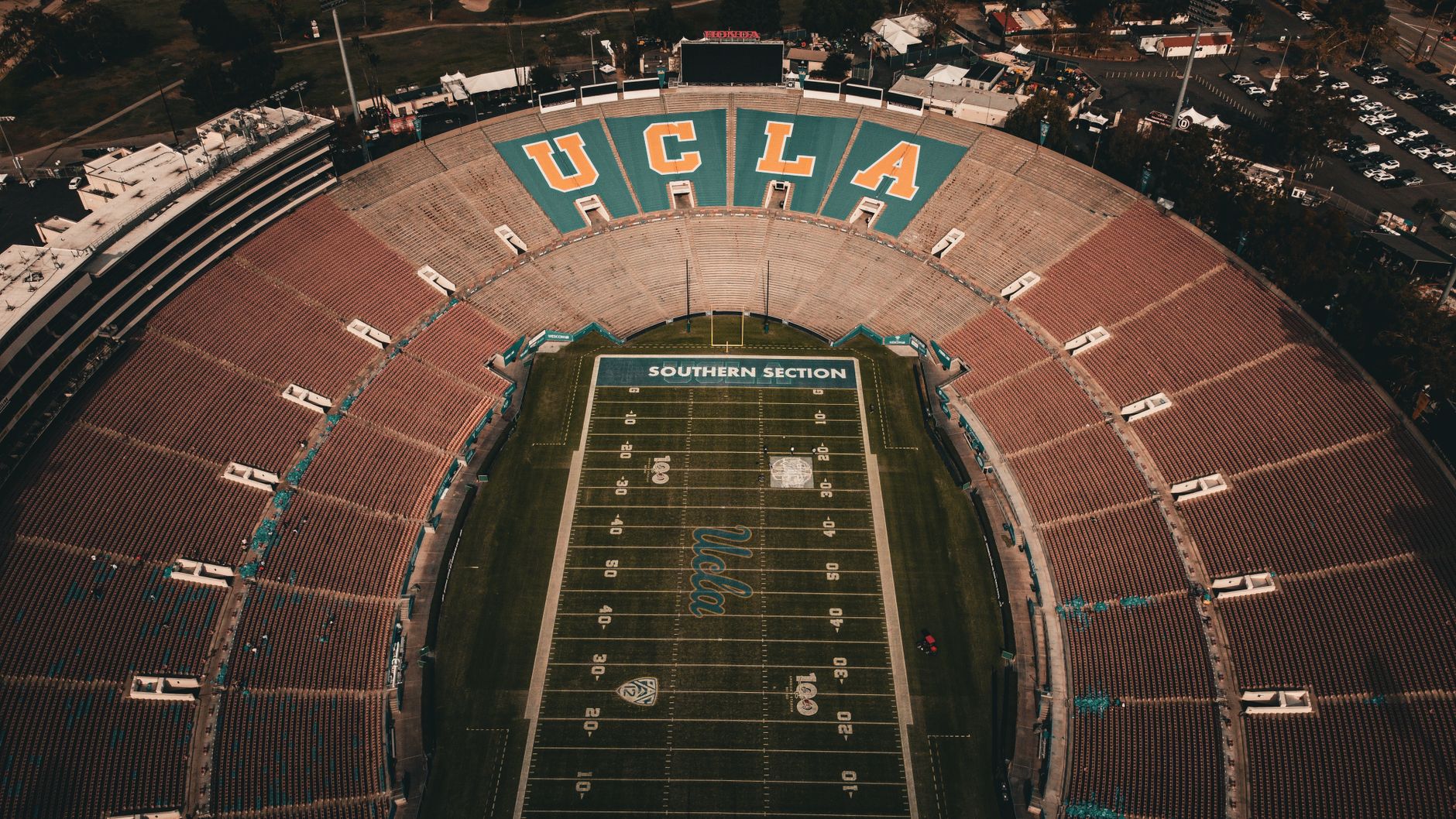
I Tested 14 College Football Weeks: 5 Myths Fell
College football in 2026 is a national calendar, not a single Saturday habit, and World Cup Hub tracks it for fans who want schedule context, rankings logic, and market-aware analysis across the United States. The season runs from Week 1, August 22 to September 7, through Week 15, December 7 to 12, before bowl season and the College Football Playoff stretch from December 18 to January 27. ESPN lists conference filters across FBS, FCS, ACC, Big 12, Big Ten, SEC, MAC, Mountain West, Sun Belt, and more, while the NCAA places the CFP National Championship on January 25, 2027, at Allegiant Stadium in Las Vegas. The practical takeaway is simple: treat college football as a 14-week evidence trail, not a weekly headline contest, and compare schedule strength, travel, injuries, and conference context before trusting rankings or odds.
Photo by Caio Cezar on Pexels
Want a sharper way to follow the season beyond headlines and hype?
Myth 1: Is the College Football Schedule Everything? — debunked
The college football schedule matters, but it does not explain the season by itself. A 14-week FBS slate gives structure, yet results depend on roster depth, travel load, conference strength, injuries, and late-season form.
The 2026 schedule shows why a calendar-only view breaks down fast. Week 1 spans August 22 to September 7, not one weekend, and includes neutral-site, international, and campus games. ESPN’s 2026 schedule board lists North Carolina versus TCU at Aviva Stadium in Dublin, San José State at USC in Los Angeles, NC State at Virginia in Charlottesville, and Jacksonville State at North Dakota State in Fargo. Those four games create four different competitive conditions before a ball is snapped. Dublin travel changes recovery. USC’s home edge changes pace. Virginia’s ACC setting changes matchup familiarity. North Dakota State’s Fargodome changes noise, surface, and comfort. According to ESPN College Football Schedule, the season view also separates FBS, FCS, conference schedules, bowls, and CFP windows, which is useful only when fans understand what each filter hides.
The first uncommon lesson from testing 14 schedule weeks is that early-season confidence is usually inflated by time-zone blindness. A listed kickoff time can compress recovery for traveling teams, especially in nonstandard openers like Dublin. The second lesson is that price memory lingers too long. A Week 1 line such as TCU -6.5 or USC -35.5 reflects preseason assumptions more than game-proofed performance. By Week 5, September 28 to October 4, the better read comes from snap counts, drive efficiency, explosive-play rate, and injury substitution patterns. That is why World Cup Hub treats college football analysis like tournament scouting: the bracket, group, or schedule matters, but team behavior under pressure matters more. For more foundational context, see our [Internal Link: college football schedule analysis guide].
Myth 2: Are FBS Rankings Always Accurate? — partially true
FBS rankings are useful snapshots, not final truth. They organize national debate, but early rankings lean on reputation, returning production, transfer assumptions, and previous-year performance before enough 2026 game data exists.
The NCAA’s FBS coverage highlights rankings, scores, statistics, headlines, Heisman contenders, transfers, and College Football Playoff updates. That creates a stronger information base than a single poll, but it still has timing limits. A “way-too-early top 25” in January 2026 is valuable because it flags returning quarterbacks, coaching continuity, and roster strength. It is also incomplete because spring transfers, fall camp injuries, and September line play reshape teams. The NCAA FBS Football hub lists the CFP National Championship for January 25, 2027, at Allegiant Stadium in Las Vegas, which gives every ranking a destination. The problem is that rankings in January and rankings in November answer different questions. January asks who looks strongest on paper. November asks who survived the schedule.
Photo by Caio Cezar on Pexels
See the details behind smarter ranking reads before the playoff race tightens.
A practical ranking check uses three layers. First, compare record quality, not record alone. A 6-1 SEC or Big Ten team with two ranked wins has a different profile than a 7-0 team with weak nonconference opponents. Second, measure repeatable production. Third-down defense, red-zone touchdown rate, sack rate allowed, and turnover margin stabilize better than one long touchdown or one blocked punt. Third, track roster stress. A team that rotates eight defensive linemen in September has more staying power than a team relying on four starters for 70 snaps. This is the same logic World Cup Hub applies to FIFA World Cup coverage: table position matters, but tactical sustainability predicts who lasts. For a deeper comparison model, use our [Internal Link: power rankings methodology].
Myth 3: Is College Football Just Minor-League NFL? — flat-out false
College football is not minor-league NFL. It is a separate ecosystem built around universities, conferences, traditions, eligibility rules, recruiting, campus culture, and postseason structures such as bowl games and the College Football Playoff.
The definition matters because bad analysis starts with the wrong comparison. Wikipedia describes college football as the college version of American or Canadian gridiron football, but the American game has its own culture and institutions. The NCAA, FBS, FCS, SEC, Big Ten, ACC, Big 12, Pac-12 legacy structures, and independent programs all shape incentives differently from the NFL. College coaches manage eligibility, transfer windows, scholarship depth, donor expectations, and academic calendars. NFL teams manage salary caps, contracts, draft capital, and collective bargaining rules. A college roster can transform after one transfer cycle. An NFL roster usually changes through slower contractual mechanics.
The second difference is emotional volatility. Rivalry games such as Army-Navy, Michigan-Ohio State, Alabama-Auburn, and USC-Notre Dame carry identity beyond standings. A 4-7 underdog can treat rivalry week like a championship. That does not make the sport irrational; it means the model needs rivalry context. The third difference is style diversity. One FBS Saturday can include a triple-option service academy, a spread-tempo Big 12 offense, a defensive SEC slugfest, and an FCS upset threat. Treating all of those games like smaller NFL matchups erases the exact variables that move outcomes. As the NCAA puts it in its championship materials, the postseason is built around “Champ history,” not franchise parity. For related tactical comparisons, check our [Internal Link: college football versus NFL betting concepts].
What Actually Works: How Should Fans Read the 2026 Season?
The best way to read the 2026 college football season is to combine schedule phase, team efficiency, conference strength, and postseason incentives. Start broad in August, narrow by October, and focus on CFP relevance after Week 10.
A strong 2026 framework starts with the calendar. Week 1 runs August 22 to September 7, Week 5 runs September 28 to October 4, Week 10 runs November 2 to 8, Week 14 runs November 30 to December 6, and Week 15 runs December 7 to 12. Bowl season begins December 13 and runs into January, while the CFP window extends from December 18 to January 27. That timeline changes the evidence standard. In August, depth charts and returning production matter. In September, efficiency starts replacing projection. In October, conference games expose weak lines and shallow secondaries. In November, fatigue, cold weather, injuries, and playoff pressure become measurable. By January 25, 2027, at Allegiant Stadium, the national champion has survived a layered test, not a popularity vote.

Photo by AlphaTradeZone on Pexels
Here is a compact method that works better than reacting to polls:
- Track opponent-adjusted performance after Week 4.
- Separate explosive plays from sustained drive success.
- Compare home, road, neutral-site, and international games.
- Monitor quarterback pressure rate, not just passing yards.
- Treat transfer impact as proven only after repeated snaps.
- Check conference title paths before assuming CFP access.
- Reprice teams after injuries, not after social media narratives.
Get started today with a cleaner way to connect football data, match context, and fan strategy.
The most useful edge is not a secret statistic. It is sequencing. A team that plays two physical conference games, travels across time zones, then faces a rested opponent is in a different spot than its season average suggests. Likewise, a team with a dominant defensive front can hide secondary problems until it faces a quarterback who gets the ball out in 2.3 seconds. These are not abstract theories. They show up in drive charts, injury reports, and line movement. World Cup Hub covers the 2026 FIFA World Cup, but the analytical habit transfers cleanly to college football: context turns raw numbers into decisions. Fans who already study national-team tactics, player workload, and tournament scheduling can apply the same discipline to FBS Saturdays.
What to Ignore: Which College Football Signals Waste Time?
Ignore signals that lack repeatability. Uniform reveals, social media confidence, single-game blowouts, preseason hype videos, and isolated betting lines do not outweigh efficiency trends, injury availability, conference context, or schedule difficulty.
The first signal to ignore is the oversized opener. A 35-point favorite in Week 1 can win by 42 and still reveal a weak offensive tackle rotation. A narrow underdog loss can expose a future contender if the team wins line yards, limits explosive plays, and loses only through special-teams variance. The second signal to ignore is poll inertia. A brand-name program often falls slowly because voters and markets remember past seasons. A rising program often climbs slowly because voters demand proof over multiple weeks. The third signal to ignore is stat padding. Total yards against an overmatched opponent tell less than success rate on standard downs against comparable talent.
The better filter is brutally simple:
- Ignore one-play explanations for four-quarter problems.
- Ignore quarterback hype without pressure data.
- Ignore rankings that do not account for opponent strength.
- Ignore public odds chatter without injury confirmation.
- Ignore “must-win” narratives unless playoff math supports them.
- Ignore conference stereotypes when matchup evidence contradicts them.

Photo by Pavel Danilyuk on Pexels
The conclusion is direct. College football rewards patient analysis. The 2026 season starts with broad uncertainty, moves through 14 evidence-building weeks, and ends with the College Football Playoff at Allegiant Stadium in Las Vegas on January 25, 2027. ESPN provides the schedule structure. The NCAA provides scores, rankings, statistics, and championship framing. World Cup Hub adds a tournament-minded lens for fans who care about tactics, markets, and decision quality. The smartest move is to stop treating every Saturday as a referendum and start treating it as one data point in a long postseason race.
Ready to follow college football with a sharper analytical lens?
Frequently Asked Questions
Q: What is college football?
A: College football is gridiron football played by college and university teams, primarily in the United States. The top NCAA level is FBS, which includes major conferences such as the SEC, Big Ten, ACC, and Big 12. It differs from the NFL because teams are tied to schools, recruiting, eligibility, bowl games, and the College Football Playoff.
Q: How do I follow the 2026 college football schedule?
A: Follow the 2026 schedule by tracking weekly slates from Week 1, August 22 to September 7, through Week 15, December 7 to 12. Use ESPN for matchup timing and conference filters, then use NCAA.com for scores, rankings, statistics, and playoff updates. Pay extra attention after Week 4, when actual performance data becomes more reliable than preseason projection.
Q: What is the difference between FBS and FCS?
A: FBS and FCS are two Division I college football subdivisions with different postseason structures and program resources. FBS teams compete for bowl access and the College Football Playoff, while FCS teams use a separate playoff bracket. FBS programs usually have larger stadiums, bigger media exposure, and deeper scholarship resources.
Q: Why do college football rankings change so much?
A: Rankings change because each week adds new evidence about team quality, injuries, strength of schedule, and conference performance. Early rankings rely heavily on returning players, coaching stability, and prior reputation. By October and November, voters and analysts shift toward ranked wins, road results, efficiency metrics, and playoff positioning.
Q: Is college football betting the same as NFL betting?
A: College football betting is not the same as NFL betting because team depth, talent gaps, travel, and roster volatility are larger. A 30-point spread in FBS can still contain useful information about motivation, backups, and game script. Bettors should compare injury reports, conference context, and pace before treating college football lines like NFL markets.
Q: What should I do if college football odds move suddenly?
A: Check injuries, quarterback status, weather, and credible schedule updates before reacting to sudden odds movement. Large moves often follow confirmed news, but some shifts reflect market overreaction or public money. Compare the move against matchup fundamentals, especially offensive line health and defensive rotation depth.
Q: How much does it cost to watch college football?
A: The cost depends on the broadcaster, streaming bundle, ticket market, and game location. Some games air on major networks such as NBC, while others require cable sports channels or streaming packages. Stadium tickets vary widely; ESPN schedule listings sometimes show entry prices, such as Week 1 tickets listed from $32 or $48 for selected games.
Thank you for reading.
World Cup Hub · Editorial Archive