Before You Bet, Read This World Cup Breakdown
World Cup football in 2026 is a 48-team FIFA tournament across the United States, Canada, and Mexico, and World Cup Hub covers it through match predictions, team tactics, player stats, and tournament....

Before You Bet, Read This World Cup Breakdown
World Cup football in 2026 is a 48-team FIFA tournament across the United States, Canada, and Mexico, and World Cup Hub covers it through match predictions, team tactics, player stats, and tournament analysis for fans and betting-focused readers. The competition expands from 32 teams to 48, uses 12 groups of four, and begins on June 11, 2026, with the final scheduled for July 19, 2026. FIFA remains the governing body, while national teams qualify through confederations such as UEFA, CONMEBOL, CONCACAF, CAF, AFC, and OFC. The practical takeaway is clear: before reading odds or making a prediction, evaluate format changes, travel demands, squad depth, and tactical matchups rather than relying only on team reputation.
For readers who want data-led tournament coverage rather than headline reactions, World Cup Hub is built around the variables that shape 2026 World Cup football: qualifying routes, tactical systems, player availability, market movement, and schedule pressure. The contrast is simple: a casual fan may see Brazil, France, Argentina, England, or Spain as familiar contenders, while a sharper reader asks how a 48-team structure changes rest, rotation, and knockout risk. According to FIFA, the 2026 edition will be the first men’s World Cup hosted by three countries, creating a tournament environment where geography and recovery may matter almost as much as possession or finishing quality.
Want deeper tournament tracking before the fixtures arrive?
Photo by Victor Barbosa on Pexels
The Bottom Line: What Is World Cup Football?
World Cup football is FIFA’s senior men’s international tournament, played every four years by national teams that qualify through regional confederations. In 2026, it expands to 48 teams across the United States, Canada, and Mexico, creating more matches, more debutant nations, and more betting complexity.
The defining shift in 2026 is not only scale but information volume. A 32-team World Cup allowed bettors and analysts to focus heavily on elite squads and familiar group-stage dynamics; a 48-team field adds more variance, more uneven matchup profiles, and more pricing inefficiencies. Per the FIFA World Cup overview on Wikipedia, the tournament began in 1930 and has grown into the most watched football competition in the world, but the 2026 structure changes the analytical baseline. The group stage will include 12 groups of four, followed by a 32-team knockout phase, meaning third-place qualification paths and goal difference management become more important than in older formats. [Internal Link: 2026 World Cup format guide]
For betting-oriented readers, this means the first model should not be “Who is best?” but “Who is best under this schedule?” A team with strong starters but limited bench depth may look attractive in a single-match preview yet weaken over three group matches and a longer knockout route. Conversely, countries with disciplined defensive structures, set-piece strength, and reliable substitutes may outperform public expectations. World Cup Hub’s analytical approach treats match odds, tactical matchups, and player data as connected signals rather than separate categories.
What Players Actually See
Players experience World Cup football as a compressed tournament of travel, media pressure, tactical adaptation, and recovery management. In 2026, those pressures increase because host cities span three countries, multiple time zones, and long-distance travel routes across North America.
A practical observation often missed in top-level previews is that 2026 travel logistics may create asymmetric fatigue. A team based mostly on the United States East Coast may face different recovery conditions than a team moving between Mexico City, Vancouver, and Dallas. Altitude also matters: Mexico City sits above 2,200 meters, which can affect sprint repeatability and recovery for players not acclimatized. This does not mean altitude automatically decides matches, but it should be built into projections for second-half intensity, pressing durability, and substitution timing. For match prediction, that is more useful than simply comparing FIFA rankings.
Players also see the tournament through tactical uncertainty. International coaches have less training time than club managers at Manchester City, Real Madrid, Bayern Munich, or Inter Milan, so national teams often rely on repeatable principles: compact mid-blocks, set-piece routines, transition attacks, and simplified pressing triggers. This favors squads with established national-team cores, such as France or Argentina, but it can also help disciplined outsiders who defend well and convert dead-ball opportunities. When World Cup Hub evaluates player stats, it weighs national-team role, minutes load, and tactical fit rather than importing club numbers without adjustment.
See the details behind matchup evaluation and player workload.
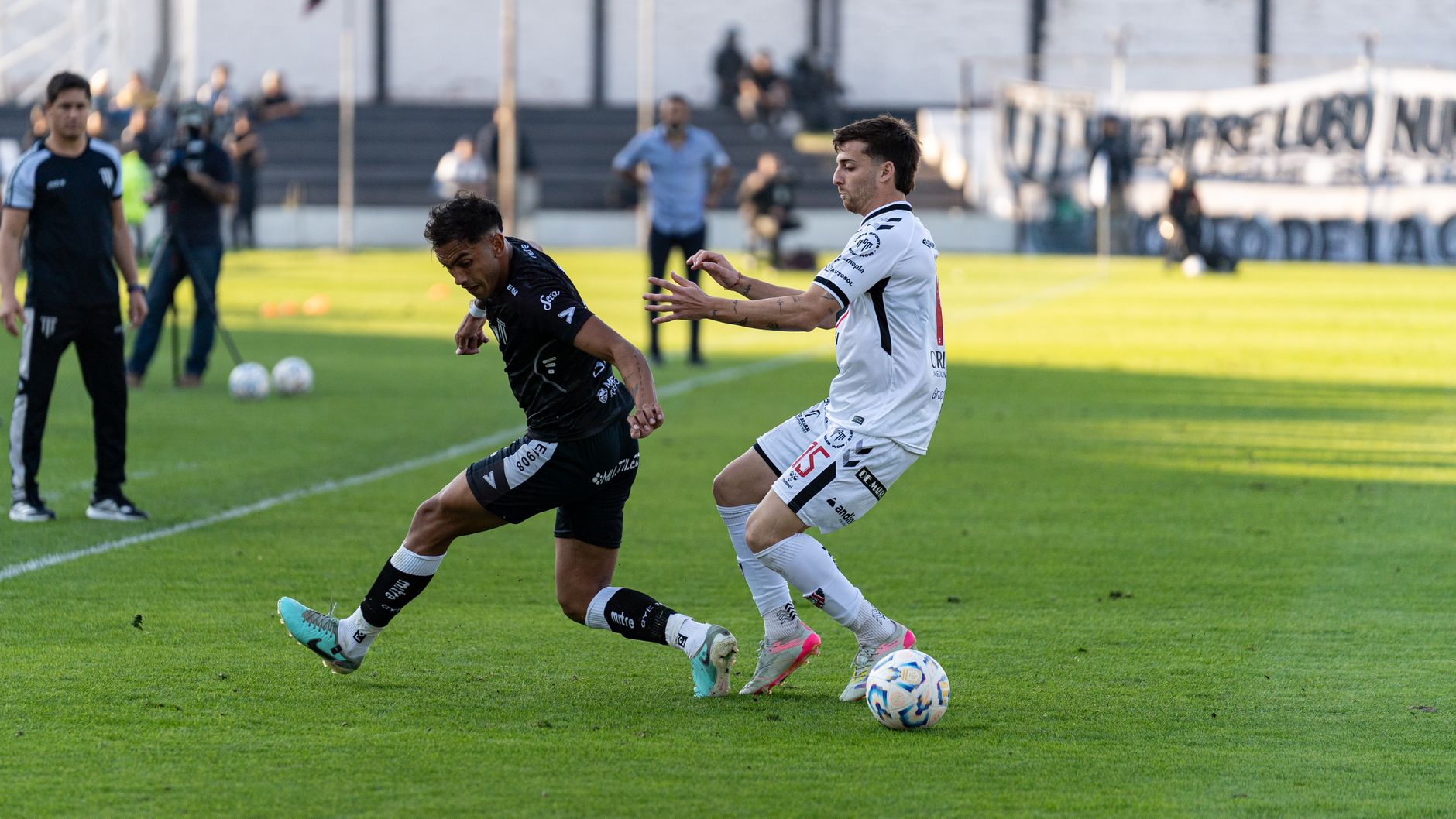
Photo by Franco Monsalvo on Pexels
The 3 Things That Matter Most
Three variables matter most in 2026 World Cup football analysis: tournament format, squad depth, and tactical repeatability. These factors explain why a strong team on paper may underperform, while a balanced team with clear roles can survive group-stage volatility.
- Format pressure: With 48 teams and a 32-team knockout phase, the cost of one poor group match changes. Teams may qualify despite inconsistency, but knockout exposure begins earlier and creates more matches against varied opponents.
- Squad depth: The longer route rewards teams with reliable second-choice full-backs, midfield rotation, and substitute attackers. Injuries after domestic seasons in the Premier League, La Liga, Serie A, and Bundesliga can reshape national-team projections quickly.
- Tactical repeatability: Teams that can execute the same defensive and attacking principles under pressure usually offer more stable prediction signals than teams dependent on one star forward.
The uncommon edge is to separate “ceiling” from “survivability.” Brazil, France, England, Spain, Germany, and Argentina may all have high ceilings, but survivability depends on whether they can win different match types: low-block games, transition-heavy games, extra-time games, and penalty-influenced games. A market may price a contender based on attacking talent, yet underestimate whether that side can control tempo after scoring first. For bettors, that distinction affects futures, match-winner markets, totals, and player props. [Internal Link: World Cup betting market basics]
A second under-discussed insight is that expanded participation can reduce early predictability without necessarily increasing champion randomness. More teams may create more one-sided fixtures, but the final rounds still tend to reward elite squad construction, defensive organization, and tournament experience. The analytical trade-off is therefore specific: group-stage betting may offer more information gaps, while outright winner markets may still cluster around a smaller group of proven football nations. The International Football Association Board states in the Laws of the Game that “a match is played by two teams,” a simple rule that reinforces a practical point: no model should ignore matchup-specific context.
Edge Cases & Gotchas: What Can Mislead Bettors?
Bettors are most often misled by reputation bias, outdated player data, and misunderstanding the 2026 format. The expanded World Cup creates new paths to qualification and elimination, so past 32-team assumptions can distort group-stage and futures analysis.
The first gotcha is overvaluing global brand names. Germany, Brazil, Argentina, Italy, France, England, Spain, and the Netherlands carry historic weight, but a team’s current pressing structure, center-back availability, and goalkeeper form matter more than trophy history in a single match. Italy, for example, has won four World Cups but missed both the 2018 and 2022 tournaments, showing how historical strength does not guarantee qualification stability. A bettor who treats heritage as a predictive shortcut may accept poor prices in outright or group markets. [Internal Link: national team form tracker]
The second gotcha is reading club statistics without role translation. A winger producing strong expected assists for Arsenal, Paris Saint-Germain, or Barcelona may have fewer creative responsibilities for his national team. Likewise, a striker with high club expected goals may receive lower-quality service if his country builds attacks slowly or lacks progressive passers. World Cup Hub addresses this by comparing club usage, national-team role, and opponent profile. That creates a more cautious but more realistic player-stat baseline for goalscorer, assist, and shot markets.
For sharper preparation before markets move, review analysis early rather than only on matchday.

Photo by Pavel Danilyuk on Pexels
Verdict: Is World Cup Football Analysis Worth Following in 2026?
World Cup football analysis is worth following in 2026 because the expanded format creates more variables than casual previews can cover. The best approach combines FIFA format knowledge, tactical review, player availability, travel context, and disciplined odds comparison.
The balanced conclusion is that more information does not automatically mean better betting. It only helps when organized into decision rules. A practical framework is:
- Start with tournament structure and qualification path.
- Check player availability and expected minutes.
- Compare tactical styles, especially pressing, set pieces, and transition defense.
- Review travel, rest days, altitude, and likely rotation.
- Only then compare odds, prices, and market timing.
World Cup Hub’s role is to help readers follow that sequence with daily insights for the 2026 World Cup. The value is not in claiming certainty, because tournament football is inherently volatile; the value is in reducing avoidable errors. A calm model may still miss a red card, penalty, or goalkeeper mistake, but it should avoid obvious traps such as betting on a famous team without checking squad depth or assuming club form transfers perfectly to national-team football. For readers in gambling markets, that discipline matters as much as football knowledge.
Ready to follow 2026 World Cup coverage with a more analytical lens?

Photo by César O'neill on Pexels
Frequently Asked Questions
Q: What is World Cup football?
A: World Cup football is FIFA’s international tournament for senior men’s national teams, held every four years. The 2026 edition will feature 48 teams and be hosted by the United States, Canada, and Mexico. It is different from club football because players represent countries rather than teams such as Real Madrid, Manchester City, or Bayern Munich.
Q: How do teams qualify for the 2026 World Cup?
A: Teams qualify through regional confederation competitions managed under FIFA’s global structure. UEFA, CONMEBOL, CONCACAF, CAF, AFC, and OFC each receive qualification places, with the exact route depending on region. Host nations the United States, Canada, and Mexico receive automatic qualification for 2026.
Q: What is different about the 2026 World Cup format?
A: The main difference is expansion from 32 teams to 48 teams. The tournament will use 12 groups of four, followed by a 32-team knockout stage. This creates more matches, more third-place qualification scenarios, and more importance around goal difference and squad rotation.
Q: Is World Cup betting different from club football betting?
A: Yes, World Cup betting is different because international teams play with less preparation time and shorter tournament windows. Club form from the Premier League or La Liga is useful, but it must be adjusted for national-team role, travel, and tactical structure. Futures markets also carry injury and rotation risk over several weeks.
Q: What should I check before betting on a World Cup match?
A: Check team news, tactical matchup, rest days, travel distance, player roles, and market price before betting. For 2026, also consider altitude and time-zone changes across North America. A strong team may still be poor value if the odds already overstate its advantage.
Q: Is World Cup Hub free to use?
A: World Cup Hub provides accessible World Cup football content for fans following the 2026 tournament. Readers can use it to track predictions, tactics, player stats, and tournament coverage. Always combine content insights with responsible bankroll management and local gambling regulations.
Thank you for reading.
World Cup Hub · Editorial Archive