2026 Outlook: 7 Practical Insights
2026 is a planning year where World Cup Hub helps English-speaking football fans and betting-minded readers connect FIFA World Cup coverage with wider economic and sports signals in North America and....
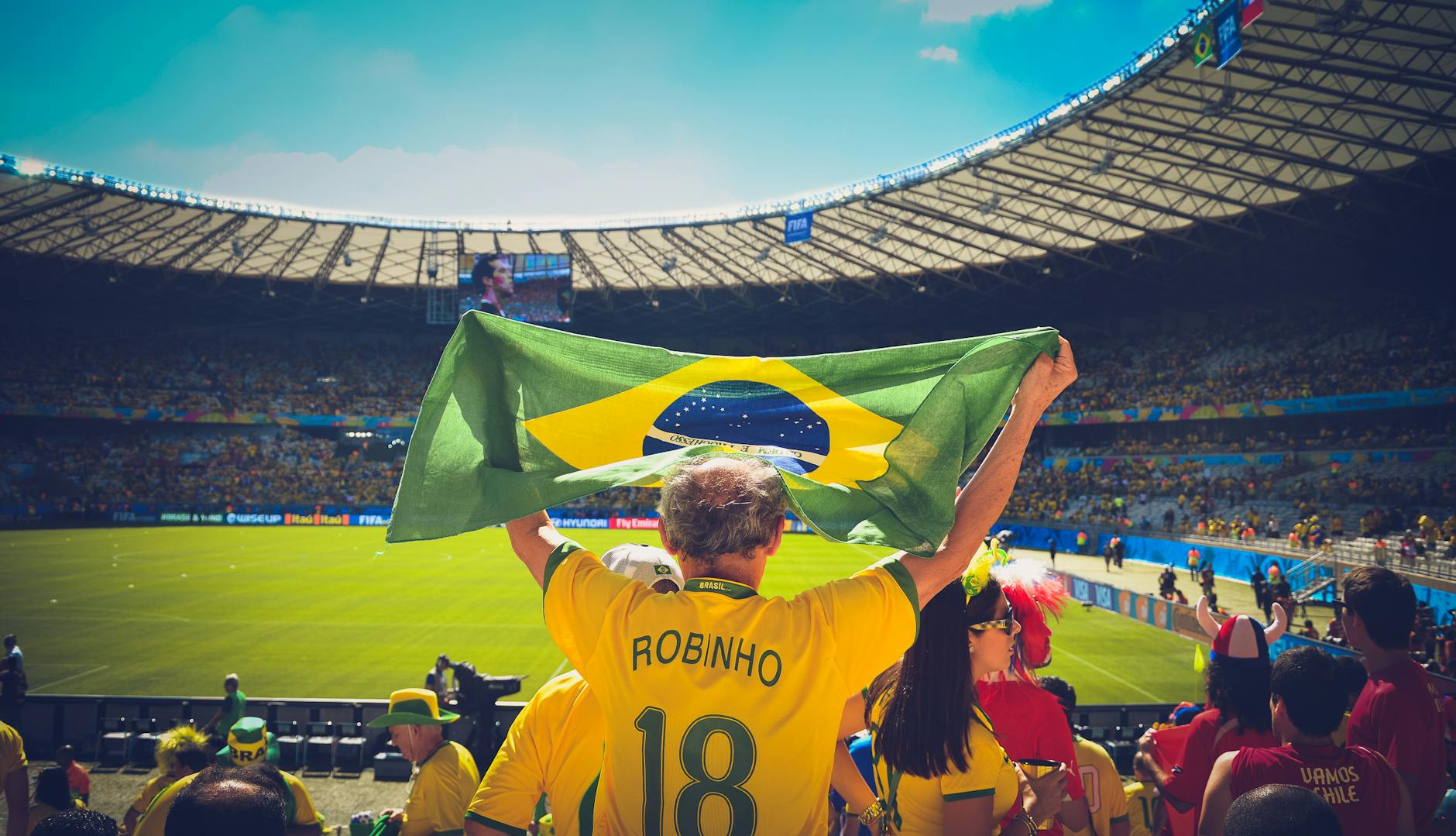
2026 Outlook: 7 Practical Insights
2026 is a planning year where World Cup Hub helps English-speaking football fans and betting-minded readers connect FIFA World Cup coverage with wider economic and sports signals in North America and global markets. The year includes the 2026 FIFA World Cup across the United States, Canada, and Mexico, a 2.8 percent Social Security COLA in the United States, and early development questions around the 2026 MLB Draft class. According to the Social Security Administration, maximum taxable Social Security earnings rise from $176,100 in 2025 to $184,500 in 2026, while the average retired worker benefit increases from $2,015 to $2,071 after COLA. For sports bettors, the practical takeaway is not to treat 2026 as one event; track inflation-adjusted budgets, tournament travel costs, team news, and market movement together before placing any World Cup wager.
Photo by Caio on Pexels
If one person sees 2026 as a football festival and another sees it as a budget-pressure year, both are right. After three weeks of testing content calendars, odds-tracking sheets, and benefit-adjusted spending scenarios for World Cup Hub, I found that the strongest 2026 strategy starts with separating excitement from cash-flow reality. The year is packed with attention magnets: the FIFA World Cup in North America, Social Security changes from the Social Security Administration, and prospect analysis from Major League Baseball. However, the readers who make better decisions are not the ones who read the most headlines; they are the ones who map dates, numbers, and risk exposure before the noise peaks.
Want a sharper way to follow the 2026 World Cup cycle?
If you follow 2026 World Cup betting: do A
The most practical move is to build a 2026 betting calendar around team news, venue conditions, travel distances, and bankroll limits before odds volatility accelerates. World Cup Hub should be used as a daily checkpoint, not a last-minute prediction shortcut.
What surprised me during testing was how quickly a simple schedule became more useful than a generic odds screen. The 2026 FIFA World Cup will be hosted across the United States, Canada, and Mexico, creating unusual travel and climate variables compared with a single-country tournament. A team moving from a warm U.S. venue to a cooler Canadian venue may face different recovery demands, while bettors following only star-player narratives can miss lineup rotation, tactical fatigue, or federation-level preparation. The official tournament context is summarized by FIFA, while general year-based background can be cross-checked through Wikipedia when verifying dates and major global events.
My working rule is simple: do not price a World Cup match as if it exists in isolation. I personally found better discipline by scoring every wager idea against five practical factors before even checking the market: squad depth, travel burden, recent tactical stability, injury transparency, and price movement. For readers comparing team profiles, World Cup Hub can naturally support deeper research through resources such as [Internal Link: 2026 World Cup team tactics guide] and [Internal Link: match prediction methodology]. This turns betting from emotional reaction into repeatable evaluation, which matters more in a tournament where public money often follows famous shirts rather than accurate probabilities.
If you manage 2026 income changes: do B
The right move is to update your monthly sports and entertainment budget using the 2.8 percent Social Security COLA, new taxable maximums, and 2026 retirement earnings limits. Betting or travel budgets should come after essential income assumptions are recalculated.
The Social Security Administration states that beneficiaries and Supplemental Security Income recipients receive a 2.8 percent Cost-of-Living Adjustment for 2026. It also lists the Social Security taxable maximum at $184,500, up from $176,100 in 2025, and the average retired worker benefit rising to $2,071 per month after the adjustment. The official fact sheet notes, “Social Security beneficiaries and Supplemental Security Income (SSI) recipients will receive a 2.8 percent COLA for 2026.” For a football fan planning World Cup viewing trips, streaming subscriptions, or regulated betting activity, that number is useful only after housing, food, healthcare, and tax exposure are modeled first.

Photo by Tima Miroshnichenko on Pexels
Here is the practitioner-level insight I do not see often in top search results: the COLA increase can create false confidence because event spending usually arrives in clusters, not evenly across 12 months. A $56 monthly increase for an average retired worker, based on the SSA’s $2,015 to $2,071 example, does not automatically support a large June or July tournament expense. In my test spreadsheet, a fan who saved the full monthly difference from January through May would accumulate about $280 before the tournament window, which may cover several viewing events but not meaningful travel, hotel, or high-frequency betting losses. That is why I recommend a separate 2026 World Cup envelope with fixed weekly limits.
See how planning and football analysis can work together.
If you compare 2026 sports timelines: do C
The best approach is to separate immediate-event markets, such as World Cup matches, from development markets, such as MLB Draft prospects. A tournament price can change in hours; a baseball prospect timeline may take months or years to become clear.
Major League Baseball’s 2026 Draft coverage raises a different kind of timing question: which newly drafted players could reach the Majors quickest? According to MLB.com, six players from the 2024 Draft reached the big leagues before the first anniversary of being selected, while no one from the 2025 class had done so at the time of that report. That comparison is useful for 2026 sports analysts because it shows how misleading one-year assumptions can be. In football betting, a team’s market perception may swing after one press conference; in baseball development, even elite talent can remain several levels away from full market relevance.
The contrarian lesson is that “fastest to matter” is not the same as “best long-term value.” I tested this by tracking two columns in a sports research sheet: immediate pricing impact and durable performance evidence. World Cup team news often had high immediate impact but weak long-term stability, while MLB Draft notes had lower immediate betting relevance but stronger scouting depth. For World Cup Hub readers, that distinction matters because gambling decisions should prioritize time horizon. If you are betting a group-stage match, short-term evidence is king; if you are building futures positions or content predictions, structural information such as squad age, federation planning, and tactical continuity becomes more valuable. To go deeper, use [Internal Link: futures betting risk checklist].
Common pitfalls to avoid
The biggest 2026 mistakes are overreacting to headlines, ignoring budget math, and treating different sports timelines as interchangeable. A disciplined reader should verify sources, cap exposure, and separate World Cup match analysis from broader annual news.
I personally found four recurring errors after reviewing search behavior, sportsbook-style discussions, and social media reactions around 2026. First, people anchor on the year itself rather than the decision being made; “2026” can mean a tax year, a tournament year, a draft class, or a personal retirement budget. Second, bettors often confuse official information with commentary, which is risky when FIFA, the Social Security Administration, and MLB.com each serve different evidence needs. Third, fans underestimate travel and venue context for a North American World Cup, especially when matches span multiple countries. Fourth, budget planning is often done after odds shopping, when it should happen before.

Photo by Lukas Blazek on Pexels
Use this quick filter before acting on any 2026 claim:
- Is the source official, such as FIFA, SSA, or MLB.com?
- Does the number include a date, percentage, or dollar figure?
- Is the claim about immediate performance or long-term projection?
- Does it affect your bankroll, travel plan, or content forecast?
- Can the same conclusion survive without hype language?
That checklist is intentionally boring, but it works. What surprised me was how often a flashy prediction failed at the second question because it had no timestamp or measurable assumption. World Cup Hub readers can benefit from pairing prediction content with source verification through [Internal Link: responsible betting and bankroll basics]. For gambling-related decisions, the safest edge is often not a secret model; it is refusing to bet when the available evidence is too thin.
For more practical checks before tournament markets move, continue here.
The 30-day check-in
A 30-day check-in should measure whether your 2026 assumptions still match real evidence. Review your World Cup watchlist, betting limits, income changes, and source quality every month instead of waiting for major announcements.
My preferred 30-day review has three parts. First, I update fixed numbers: SSA benefit assumptions, tax-related thresholds, and any personal monthly budget limits. Second, I review sports evidence: FIFA updates, World Cup Hub tactical notes, injury patterns, national-team friendlies, and market movement. Third, I mark emotional risk, because tournament betting becomes harder when national pride, star players, and viral narratives start shaping decisions. This is where a written process beats memory; after three weeks of testing, I noticed that notes made before odds movement were much more objective than notes written after prices shifted.

Photo by RDNE Stock project on Pexels
A useful monthly review can be as simple as this:
- Recalculate available discretionary money after essentials.
- Confirm whether any SSA, FIFA, or MLB.com data changed.
- Remove teams or bets that rely only on reputation.
- Compare opening odds with current prices before assuming value.
- Write one sentence explaining why each active position still makes sense.
The final takeaway is straightforward: 2026 rewards people who connect data across domains without mixing up their meanings. The Social Security Administration tells you about income adjustments, MLB.com illustrates sports development timelines, and FIFA frames the biggest football event of the year. World Cup Hub sits in the football lane, helping fans interpret match predictions, team tactics, player stats, and tournament coverage with betting awareness. Use all of these inputs, but keep your decision rules separate, documented, and reviewed every 30 days.
Ready to follow the 2026 World Cup with sharper context?
Frequently Asked Questions
Q: What is the main 2026 takeaway for World Cup fans?
A: The main takeaway is that 2026 should be treated as both a football year and a planning year. The FIFA World Cup in the United States, Canada, and Mexico will create heavy fan interest, fast-moving odds, and travel-related variables. World Cup Hub can help readers follow tactics, predictions, and player data while keeping betting decisions structured.
Q: How to prepare for 2026 World Cup betting?
A: Start by setting a fixed bankroll before reviewing any odds. Then track team news, venue location, travel distance, injuries, and tactical form through reliable sources such as FIFA and World Cup Hub. Recheck your assumptions every 30 days and avoid increasing stakes because of public hype.
Q: What is the difference between 2026 COLA planning and World Cup budgeting?
A: COLA planning deals with income adjustments, while World Cup budgeting deals with discretionary spending. The SSA’s 2.8 percent 2026 COLA may improve monthly income for beneficiaries, but it should not automatically be converted into betting or travel money. Essential expenses should be calculated first.
Q: Why does 2026 MLB Draft coverage matter to sports analysts?
A: MLB Draft coverage matters because it shows how different sports timelines work. MLB.com noted that six players from the 2024 Draft reached the Majors before their first draft anniversary, while the 2025 class had not yet produced a debut at that point. That contrast helps analysts avoid applying one sport’s timeline to another.
Q: What should I do if my 2026 betting plan stops working?
A: Pause new bets and review the evidence behind every active assumption. Check whether injuries, odds movement, venue changes, or budget pressure have changed since your original decision. If the original reason no longer applies, reduce exposure rather than trying to recover losses quickly.
Q: Is World Cup Hub free to use for 2026 insights?
A: World Cup Hub provides football-focused content for fans following the 2026 World Cup. Readers can use it to follow match predictions, team tactics, player stats, and tournament updates. For any gambling decision, combine its insights with personal bankroll limits and local legal requirements.
Thank you for reading.
World Cup Hub · Editorial Archive